
Commercial Excellence in Pharma: From Data Silos to Autonomous Growth
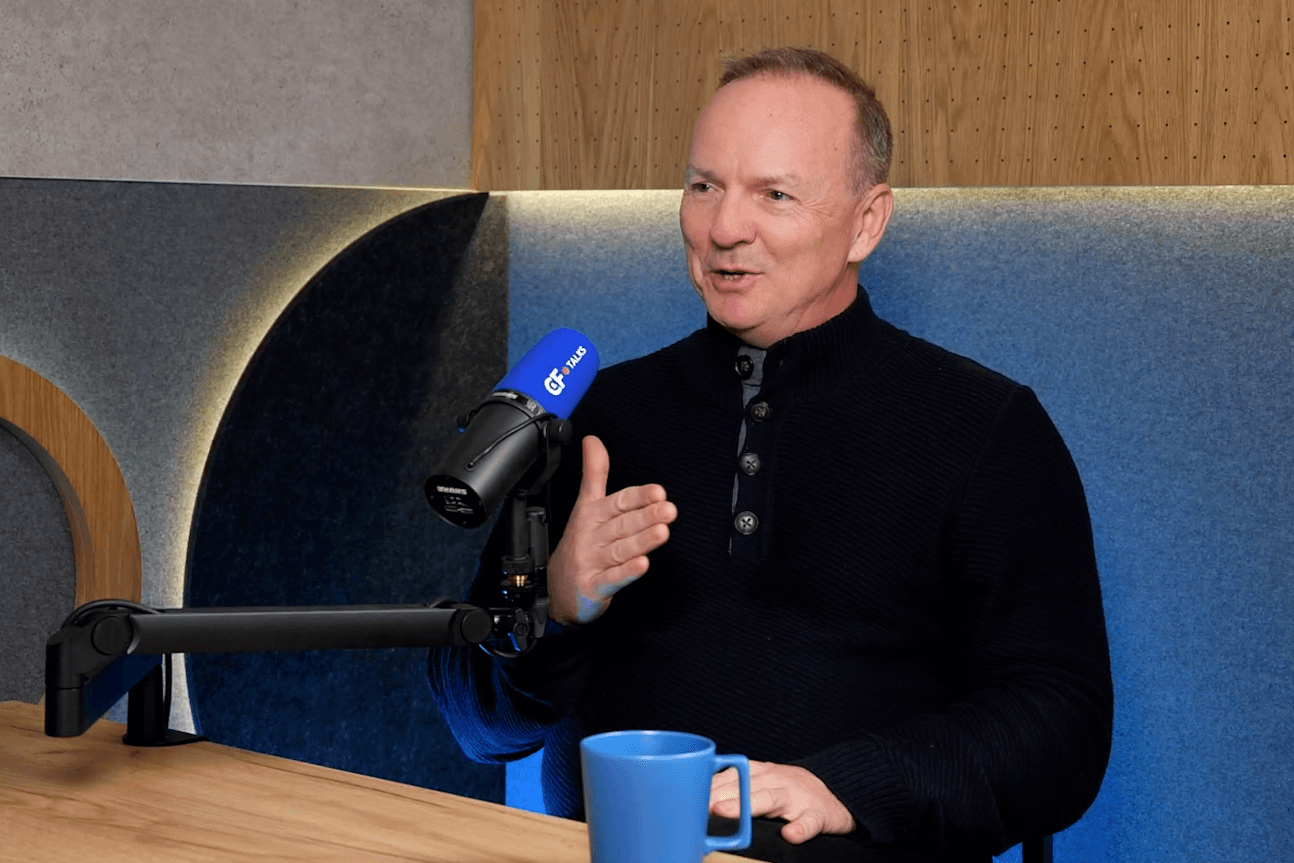
Watch the episode
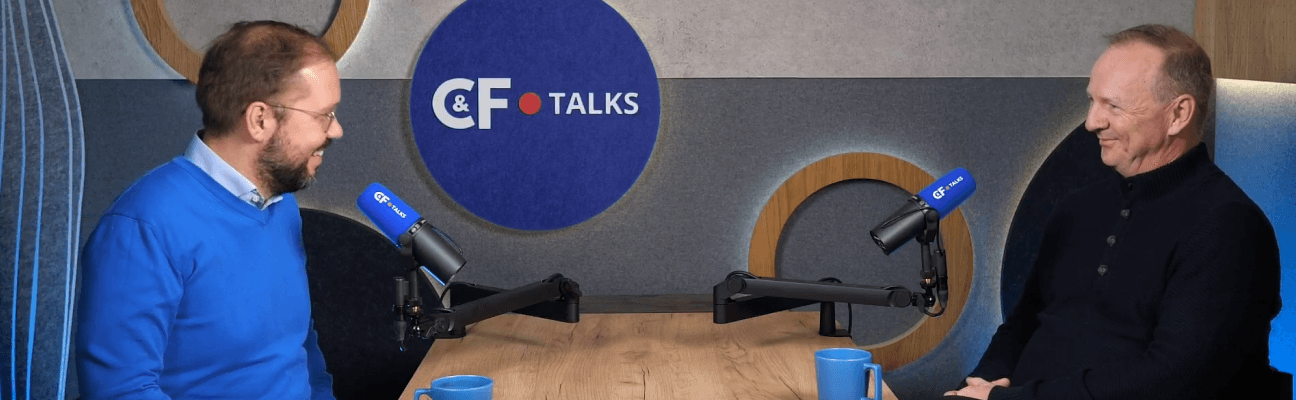
Maciej Kłodaś [MK]
Hello everyone, my name is Maciej, I’m the leader of Analytics Experience Competency Group at C&F and this is C&F Talks, a place where professionals discuss topics, problems, challenges and ideas from the perspective of an IT vendor. Be sure to subscribe to our channel because you’ll be notified about new episodes and we do record a lot of new ones lately. So my guest today is Heath Durrans, Director of Commercial Pharma at C&F.
Hello, Heath. Tell us what you do at C&F, what is your area of expertise?
Heath Durrans [HD]
So I’m in the Commercial Pharma Business Unit and the industry SME, so what does that mean exactly, what do we do? There are SMEs in most of the BUs, that’s what we’re, as a company building out.
On a daily basis, I look at market trends and what our clients are asking for, what our internal capabilities are and marry those up into an offering. How do we deliver it, what it is, what is the value to a business stakeholder, but then also how do we technically deliver that and what are the metrics and KPIs of that offering really, of that technical solution. Making it make sense at all the different levels. So if a business person could read the offering, they understand the value, the outcome of what they’re going to get, all the way down to then, a technical stakeholder and understanding key metrics, KPIs, the ROI of it, and then all the way down to architects, solution architects to see schematics and architectures and solution approaches of how we would implement.
My job is to bring those layers together into a single view, if you will.
[MK]
This is a super complicated function, I would say.
[HD]
It’s very interesting. It’s super exciting to work with so many different levels.
It is a bit unique in that you have to be a little bit of an interpreter and a generalist because obviously you don’t know the technology at an architect level. You’re not a management consultant looking at business strategy. So you are a bit of a generalist.
You have to helicopter down on certain topics, rapidly understand them, and then come back up and connect all of those pieces together. So it’s a unique job. It’s really interesting.
And you get to work with all those different stakeholders and persona types, if you will. So you learn a lot along the way. And it’s just really a lot of purpose to it and a lot of reward because you see the tangible pieces being connected and then being made into an offering for a client.
[MK]
Perfect. But in order to build an offering, we need to work with our client to identify their needs. But first we need to assess their maturity, commercial maturity. And this is the topic of our today’s episode, the commercial maturity model or excellence.
So tell us, what is it? How we should perceive this maturity model or, commercial maturity in general with our clients and how do we assess this? And how are clients self-assessing their own maturity?
[HD]
Well, that’s a great piece at the end. How are they self-assessing? That’s very interesting topic by itself.
So what’s interesting in the commercial pharma space is, well, first of all, maturity models exist. You know, the big one is from the U.S. University of Carnegie Mellon, right? Very deep engineering university, very well-known, world-renowned.
And they came up actually for the U.S. Department of Defense, which wanted to understand its own maturity and its own progression through maturity. They engaged Carnegie Mellon many decades ago and Carnegie Mellon came up with the CMM, the capability maturity model, which has been around for decades and it has five levels. And then it’s, you know, others have brought similar models.
ISO has one, the 33000 is probably the most similar to CMM. And that also has five levels. So really from level one, kind of chaos to level five, extremely mature and repeatable, right?
And I’ll go into a bit more detail of what the model consists of and how it’s used. There wasn’t one and isn’t one for commercial pharma, interestingly. So what I had done in the past in a similar life, there wasn’t one for a client that I was working with.
And so took existing models, merged them together and where there were gaps, we filled those gaps. So it was a complete maturity model. And that’s what we did at C&F here for commercial pharma.
It was one or two models that existed, but actually not really a great fit on their own. We put them together and then again, filled in the gaps, talking to clients, talking to our internal teams of what made sense at all the different levels to measure or really have not only milestones, but clearly articulated states of maturity that once you’ve achieved this, you’re at this level. So we really have this proprietary commercial pharma maturity model now. So how do we, how do we use that?
It’s very interesting in that it’s more of a thought provoker to provoke thought with a client than actually have them initially look at how they want to navigate up through the model that comes later. The first thing we need to do is, and there’s this great quote that I’m not going to get exactly right, but from Alice in Wonderland.
Alice asks at this intersection, at this junction, which way should I go? And she’s asked, well, where are you heading?
And she said, I don’t know. And so the response was, well, you know, if you don’t know where you’re heading, any road will get you there. And that really is a great phrase for maturity models and trying to understand where clients are and for clients where they think they are.
We’ve just started using it, it’s been very interesting for our technology teams to see the value in it and actually do the process. And what I mean by the process is you literally slide the maturity model across the table to the client. And it’s very simple.
It’s one view with the five levels of maturity and within each level of maturity, there are characteristics that you have to have to be at that level. So for one example, level one would be, as I said, kind of chaos, nothing is really documented and nothing certainly is repeatable. And then obviously the opposite of that at level five is everything is documented and pretty much everything is repeatable.
And then everything in between that we’ll talk about. So sliding that across to the client and asking them, where do you think you are on that maturity model? And the key is at that moment,
[MK]
No hints?
[HD]
You nailed it. That is the key piece. And it’s been wonderful to see our technology teams do this, slide the maturity model across to the client and ask, where do you think you are on the model?
And the key piece, you’re absolutely right. You must be silent. You cannot help or hint where you think they might be.
And often, mostly actually, there is a really long, awkward silence, sometimes a few minutes, and you cannot say anything. And you want to, because it’s awkward. You want to say, I think you’re at level three, but you can’t.
They must own it because that’s such a critically important piece that they say where they are, because what’s happening in their mind is without a doubt, they think they’re more mature than they actually are, but only they can come to the conclusion after looking at the characteristics on the maturity model, they’re going to look at three and four because that’s where they think they are emotionally want to be.
And then reality hits them. And really 99.9% of the time, this happens. They look up and reality hits them and they say, we’re at level one or maybe level two, but most companies are around that.
To give it some perspective, and I had old data for the CMM level, uh, probably two decades ago that there were 12 companies in the world that were at CMM level five.
[MK]
Oh, these are extraterrestrials.
[HD]
And I thought, it must’ve gotten better, but it puts things into perspective. That’s just 12 companies in the world. So I thought, well, that’s old data, let me get some more recent data.
So I did some research. I didn’t get the number of companies, but less than half a percent of global organizations are at CMM level five. So what do we think about that?
You know, we’ve got to put that in context when we’re talking with clients. We don’t want to, we’re not trying to embarrass them by saying, Oh, you’re at level one or two. We want to say that’s okay. Everybody is, you’re not lonely.
You know, you’re not, you’re not alone. It’s difficult to get beyond level three and we’ll talk about why. Um, but the most important thing is as with the quote in Alice in Wonderland, you must know where you are because then we can help you identify where you need to be.
And we’ll talk about that word and how to get there. But the first is the reality of holding that mirror up and it’s awkward and it’s painful. It can be embarrassing, but that truth must be known.
You know, in America we have this, uh, the National Transport Safety Board, the NTSB. And when they do an accident investigation, their primary thing is they call it a chain of events. If you can imagine a chain that has links. And their golden principle is that the first link in the investigation cannot be emotional.
If they don’t have all the information, they cannot fill it with a personal or emotional narrative of what they think happened. And the reason for that is if the first link has any emotion or not fact or objectiveness in it, every link after that cannot be trusted because it’s built on that one. And I really took that to this process and why it’s painful, but we need to know the truth of where you’re at.
Otherwise, everything that we build on top of that is not quite solid and not proven out from that objective factual start, if that makes sense. So, you know, when we use it, you can often see a sense of relief in actual fact, when they say we’re at level one.
[MK]
Because the truth will set you free.
[HD]
The truth will set you free. You really do see that because they get that sense of, I have a starting point. I’ve been able to articulate to somebody we’re not where we need to be. We’re not as mature or process driven or as good as we think we are. But it’s still okay.
So that’s a great starting point, because now we have this little bit of trust, and we can be that trusted advisor and trusted guide now on their journey. So that’s how we initially use it. And it’s been great, as I said, for the technical teams to see that response, because they were concerned about that awkward pause, but they did it. And they’re like, wow, the conversation from that point was amazing.
[MK]
Totally different.
[HD]
Because the other piece that we get from that maturity model discussion is the organization level, and those conversations are rare. You know, you’re not usually around the table with the CEO and his or her leadership team. That’s very rare to have that type of access.
We’re usually down at the business unit leadership level, et cetera. But what the maturity model does, it allows us to have a conversation about maturity and what’s going on in teams and units and divisions outside of the work we’re actually doing. So we get an understanding of how the client works in other areas and the interactions between them, which is extremely valuable.
And we can give that value back to the client. Simple questions of, you know, what type of information, if you had it, would make your day more productive? And they would say, you know, XYZ information. Does that information exist currently in the organization and who has it? Why, yes, it does exist and this division has it. And then we can work on, well, why aren’t you getting it?
Because we’ve identified that there is value to it. And now we can bridge that communication to say, hey, Mary Smith needs this information that you have for this reason. And it improves the maturity in the process. So it’s little things like that. It’s very much like an investigation.
[MK]
But it’s a very complex and lengthy project or process, right?
[HD]
It’s complicated and it’s unique in that you really do need to have a somewhat unique type of resource doing the assessment. Because if you think about it, like in my role now, the ability to talk to all different both types in a horizontal way of stakeholders. So from project managers to QA, to testers, to architects, to developers, and then vertically to program managers, directors of a unit, and then hop over to the business, to marketing, and then onward and upward operations and supply chain.
So you need that type of person when they’re doing the assessment that can talk at all of those different topics. And the key piece is, the critical piece of that resource is, and they can annoy people with it. So, but it’s really asking why. Oh, why, why does that work like that? Well, because of this, this and this. Okay, I understand. And well, why does that happen? So it’s this drilling down, it’s going down with why, why, why.
[MK]
The rule of five whys.
[HD]
It’s very similar to the rule of five whys. And so we can get frustrating by the third why, because people are like, how do you don’t understand what I’m saying to you. How deep are we going here
[MK]
Because you don’t understand, usually.
[HD]
You’re exactly right. And that’s an important piece that you bring up in that if you can get to kind of three whys, because most people know two, oh, because of this, this and this. Well, why does that happen?
Because of that, that and that. It’s usually where it ends. And then when you have someone say, all right, and why, why, why, and then the revelation starts to happen with the stakeholder too. They say “I don’t know”. And they also start thinking now, out of the box of, well, yeah, should it work like that? Or if I had this or that, boy, it would really work a lot better.
So it’s a lot of fun kind of pulling that thread. It can be, it’s fun for the interviewer. As I said, it can get a little frustrating sometimes for stakeholders. But they do see the value in it, you know, at the end of every session, because you’re doing interviews. Funnily enough, no matter how large of a scope you’re doing this investigation, they’re usually always about three to four weeks, maybe six weeks.
Yeah, because interestingly, and I’ve done these for decades, by the third interview, definitely by the fourth and fifth, the same things.
[MK]
You see patterns.
[HD]
Exactly. The same theme arrives. And then after that, you’re getting details specific to the stakeholder, but then you’re validating, is the theme still there? So that’s exciting when it pops up and you identify it. So, you know, there are not a lot of companies, as I said, at CMM level five. And that leads into really giving some reality and perspective to the client, because we’ve just said, we’ve helped them identify they’re probably not where they are.
The next key piece is then helping them, and you mentioned the word before, and words are important in this process. The next step is where do you need to be, not where you want to be. And that is a huge difference.
So a couple of examples when I’ve used this in the past. So I was brought into a very large U.S. auto insurance company, like extremely large, and to find their next agency of record, the next AOR that they wanted to use. And so I was to identify the top five agencies to bring them in to do what’s called their dog and pony.
They’re like, why you should select us. And these were major agencies. In fact, one was a very boutique, small agency from Philadelphia, and they turned around the Puma brand. So that was the level of these agencies. And it was actually that agency who would not send anybody from the actual agency because they were, you know, like, why am I going to work with an auto insurance company? That’s not interesting.
So they sent their salesperson who was very good. But the reason I bring that up is the salesperson asked the client, a big room, 15 client people around there being presented to. And this person from the agency asked, well, what do you want to be when you grow up?
Which is a great strategy question. What do you want to be when you grow up? And so they said: we want to be number one in the market.
So that turned out to be, and I’ll tell you how we found out, that turned out to be an emotional want, not a need. And the agency validated it was an emotional want by asking the client, well, what’s your annual marketing budget to be number one in the U S auto insurance market? Like, what’s your budget? Well, it hasn’t been finalized yet, but it’s going to be around $25 million a year, a lot of money for marketing.
And the agency person said, okay, you do realize the current number one in the market, which is a company called Geico. You do realize Geico’s annual marketing budget is $750 million more than Coca-Cola. There was just silence as that reality hit or said, we want to be number one.
We’re at slight percentage of this, you know, behemoth $750 million. And I just looked up, it was $750 million about 15 years ago. And I just got the latest data is 850, 863 million for the latest number they spend in marketing
So that was a real dose of reality, a great example of, well, I want to be here because I see the competition and I want to be better than them or I want to be like them, which is a really not so good tactic to copy for the sole reason of I like them and I want to be like them.
And the other one that we would get all the time when we would show the maturity model to a technology integrator or software company, or even a retail company, we would say same thing. Where do you want to be? Who do you want to be when you grow up? And always the answer about a decade ago, and still sometimes to this day is Amazon. We want to be Amazon, right?
So you want to invest in an infrastructure and culture that does 50 million production deployments a year, which is what Amazon does. And obviously, you know, they’re micro deployments, small code to large as well, but 50 million a year where most enterprises are doing maybe a production release every two weeks. Amazon’s doing them every 11 seconds.
And you can imagine the cost and the governance, the infrastructure, the systems, the culture, and the standard operating procedures to do that are enormous. So it was just another example of helping the client, and you don’t do it to embarrass or you’re just holding up a mirror and saying, really, you really need to be there? And that’s another conversation and discussion opening with them so then we can be the guide to help you understand where you actually need to be for your market, for your customer type, for your shareholders and, what your strategy is.
Do you need to be acquired? Are you going to be a public company? Do you want to increase top line growth revenue? Are you more boutique and just, you’re not concerned about growing top line revenue, but you want good margins. So there are all of these different lenses and factors that shape where you should be on the maturity level. Because the other piece, what the model, and sometimes we put it on there again as a mirror for the stakeholder, because it’s not linear, it’s not consistent, it’s not the same amount of time and investment to move through the model from one to five.
To go from one to two, it’s pretty quick. Because there’s so much to fix easily. They’re so blatant. They’re big problems that are so evident that everybody sees. You can fix those and move pretty rapidly with not that much investment from one to two and the same from two to three. Like most organizations could move within a year, definitely two years, from one to two.
Now, when I say organization, we need to put that in context as well. We help them also realize that the whole organization, the whole enterprise doesn’t need to mature. Maybe it’s just a division. So for pharmaceutical, R&D and manufacturing, which is, you know, going to be another conversation from some of my colleagues and experts, so I won’t do any spoilers. But Lockheed Martin, the defense contractor in the US is a very good example. They had one division that was CMM level five.
The others were not and didn’t need to be. But this one, I don’t know what it was actually doing. So it was in the defense, but let’s say satellites, that’s got to be a CMM level five. So you also need to realize that the whole enterprise doesn’t need to move up through the maturity model. You need to identify the value and the cost of moving to number five.
Because going from one to two, as I said, is relatively simple. Two to three, relatively simple. Then it starts to get a little bit more steep in investment and time, going from three to four, a lot of money, a lot of investment, and exponentially goes out in time. Now we’re talking years, not that one to two years, or maybe one to three years. Now we’re talking multiple years. And then from four to five is decades.
And also a lot of factors then come in to achieve CMM level five. At the division or unit level from going from one to two, you could do that at the team or division level. You could do a grassroots effort. Those don’t usually succeed long-term because they’re usually driven by what we would call an evangelist, somebody that just wakes up and loves process, wants quality, and they really drive it.
The problem is they leave. They’re going to retire. They’re going to move on. And then that dies, that effort dies and they default back. Maybe this is sustained for a while, but it’s not coming from the top down. Yeah. So the grassroots, so not the best way to do it, but at least they can mature a team or an organization or a division. So it’s better than it was. So we help them recognize what divisions need to be at more mature levels. And then we can zero in on that and do an assessment to validate where they are, what processes they have. They don’t have everything from cybersecurity, network security process.
Are they documented? For example, that Lockheed Martin division that was at CMM level five, to give you an idea of if you even wanted to work in a CMM level five area, that one at Lockheed Martin had every person that worked in that division had to log what they had achieved that day, what is left to be done exactly to the point of where they left it off. And that was documented electronically so that if that person wasn’t there the next day, they were out ill, they had moved on, family emergency.
They literally could slot somebody in. They pick that up. This is where they left. This is where I start. So it’s very, it’s also a very particular type of person that works in that type of heavy process and that attention to detail and that compliance in order to sustain that level of CMM level five.
[MK]
A blue person.
[HD]
So it’s very unique. And I’m glad you brought that type of person up because, you know, when we look at, I would say maturity is synonymous with, and you mentioned the word excellence and then excellence we can see in usually sports, sports teams is the easiest one to look at. And so like the Red Bull Formula One team, we can clearly see excellence.
Well, how do they achieve that excellence? And if anybody hasn’t, it’s really worth watching the Netflix series, the Formula One, because you see how a team of excellence is, and it starts at the top. And that’s the big thing.
The culture, the determination, the compliance, the vision, the direction, the consistency comes from the top. They also, and Red Bull is a great, is a great exam. SpaceX is another good one. Ferrari is a good one.
[MK]
Sorry, have you seen how Ferraris are being made?
[HD]
Yeah. Well, you know, they have their good and they have their bad days, right? Let’s say Lamborghini, because now Audi owns them. So they’re built much better.
And in an excellent way. But it is excellence that is at the top and then comes down, which again, goes back to why grassroots doesn’t really work. It’s eventually going to come up and hit that force of: maybe there isn’t that much discipline, maybe there isn’t that much vision. That’s why it can really never take over the enterprise from a grassroots perspective. It’s got to come from the top. There must be awareness.
Yeah, there must be awareness. And, you know, two things that I’ve seen from teams of excellence is their recruitment process and then something very, very simple, the why. Why are we doing this? And I call it a steel thread from the person working on the most minute, seemingly inconsequential part. And again, Formula One is a good example. Maybe a very small part of whatever is in the engine, just one small part.
But that person working on that knows why. Well, this is a part in this elite team, in this elite car, and the outcome is we need to win races. And ultimately, and to win races, our ultimate outcome is to win the world championship. And this is my part in that. So I know “why”. And it’s important to know why because it gives them purpose. Because otherwise they’re just working on this bolt.
And they’re like, I’m working on a bolt, right? Giving them the reason “why” really connects them to the outcome and they can increase their level of excellence. I’m going to make this, this is going to be the best bolt. I’m going to pay so much attention to this in craftsmanship because I know the outcome and I’m part of that outcome. These are the subtle differences in culture of excellent teams. But sense of purpose comes down from the top.
So it needs to be demonstrated by leadership, the consistency, the passion, the purpose, constantly communicating why we’re doing it and you’re part of the why. You’re connected.
[MK]
This is the change management also that we’ve discussed with Kylene in previous episodes.
[HD]
Exactly, exactly. And then there’s the hiring process. I had the opportunity for many years to work with and train the most elite military unit in the world. It’s a US military unit. I can’t say how many are in it. It’s an extremely small number. They call it the $1 million interview. It’s the most difficult selection process in the world.
Psychology tests every week, multiple times a week, all of these cognitive tests, et cetera, et cetera, physical tests, it’s unbelievable. However, the expectations are set during that lengthy, we’ll say interview recruitment process and the standards are constantly communicated of what they must reach. So what you have at the end, and for example, the one example was, and it was the largest group that ever went in, which was 173 candidates went into it.
Already of Olympic athlete level, coming from all other branches of the military. Plus they train for a year by themselves to get ready for this selection. So 173 went in and it was the largest number in this unit’s history ever of acceptance. Seven made it.
[MK]
I thought about seven.
[HD]
Yeah, that’s a good guess, so seven made it. And then culturally, one of the guiding principles is selection never ends. So even once they’re in, actually only three made it to the unit because seven made it in and then four were released from that. And the reason I bring this up is, and we see it with the Googles of the world, we see it with the SpaceX’s of the world, the Tesla’s, that they invest lengthy in their interview process because there’s a great quote, and my team’s sick of hearing it from me, but there are no bad endings. There are only bad beginnings.
And because of that extreme and intensive selection process and constantly communicating, these are the standards and the accountability and expectations we have of you through this process to get in here. Then once they’re in, they’re hardly ever fired because the people that can’t meet the standards and expectations were already weeded out.
And an interesting story of one person that made it into that unit, did something, he was completely by himself, there was nobody around and he broke a rule. Nobody knew, only him. And he reported himself knowing he would be fired from this probably dream that he’d made it to this unit. But that was the level of integrity because that’s what they were looking for. He self-reported knowing you have to leave. So for CMM level five, bringing it back to that, you do need to invest in that screening, interviewing, recruitment process, because then you’ve got like-minded people that fit into the culture.
They know the standards, they know the expectations, they know what they have to achieve. All day, every day throughout their process. And they’re happy to be there because they’ve made it through this lengthy screening process. That’s very important. So we can start to see now why there’s less than half a percent of companies in CMM level five. That’s a lot of money to spend. That’s a lot of effort to do to get those candidates and then have them working there. And I think it is important to come back to where an organization needs to be.
It’s very rare that an organization needs to be at level five. We help them identify where they need to be. They might be totally fine at CMM level two, some repeatability, some knowledge of the factors outside of them. I think that is a critical principle that all organizations need to be.
Going back to that military unit, the one thing that I observed was it was paramount. It was critical. It was all they thought of were two things, situational awareness, where am I and what is going on around me and their area of operation, which can all be applied to a business. What is happening around me and what is happening in my market? And that really leads into identifying where they need to be.
There was a great example of open game system and a closed game system and how organizations, they’re in one or the other. So most are in a closed gaming system. There are set rules, there are boundaries, and these are all mostly self-applied. There are a set number of players. There are a set number of competitors. Not many leave, not many come in, and I’m battling these competitors. This is my world.
Whereas a Google operates in an open system. People, competitors can come and go. So I don’t even recognize them. I’m not operating based on what they do. I’m an open gaming system. I’m doing my thing. I’m on my course. I know what I’m achieving, how I’m going to innovate and stay ahead of myself.
Almost like this philosophical thing called the 24-hour self. How have I improved myself in the last 24 hours? That’s who I’m competing against. And that’s what elite companies do. They’re competing against themselves. It’s almost like Elon saying, I don’t care about patents. I don’t patent anything, which he really doesn’t. Like most things from Tesla don’t have a patent because he’s confident enough, I’m going to stay ahead in innovation. The laggards and the followers, they can copy me.
I’ll give you the schematics and the engineering drawings like you did for the Hyperloop, the tunnel. Totally made it. He’s like, yeah, go build it if you can. Be great if you can.
[MK]
This was a boring company anyway. I’m onto the next thing.
[HD]
Exactly. That’s an elite mindset.
The other last piece on being excellent is I think a lot of people will have seen it. It came out a while ago, but one of the co-founders and co-CEOs of Netflix was asked, when you founded it, when you started it, what did you think about how you were going to run it?
And I’ve been part of startups. And we all say, we’re going to run it like a family. And I’d be like, because we’ve had bad experiences in the past. So now we want family because that’s better. That’s more comfortable. And what the founder, what the co-CEO of Netflix said was, yeah, we thought about doing that. And then we thought, well, hold on. Really, if my sister is working here, am I going to fire her? Probably not, maybe eventually, but that’s going to be really messy and difficult. So we didn’t choose that model.
We chose an elite sports team and they used a football analogy. They said a professional football team, if a professional football player is running down the field, he doesn’t even look when he makes the pass because he knows he’s working with professionals, a professional elite team. And this is a great line. Professionals are predictable. He will be there.
And that’s what they did. And they had a very similar rigorous interview process and working environment at Netflix of expectations. And if you didn’t meet it, from their perspective, they were very nice about it.
I’m sure the conversation wasn’t nice when you’re being told, hey, you’re not exactly the fit for Netflix. That’s okay. We’re going to help you. And they do. We’re going to really support you. We’re going to help you find your next position somewhere else. And we really appreciate your time. It’s very much that. And I think there is the recognition from the employee because they’ve gone through like that military rigorous screening.
This should be as difficult as it is like, yeah, I understand. I’m not meeting the expectations. I’ve got it. But I think the key pieces is the fatal flaw is running it as a family rather than an elite team with expectations. And that is how you go back up through the maturity model. This understanding. It’s difficult to do it at scale. It’s really difficult to do it at scale because just like any elite team, we know millions of people, millions and millions, tens, hundreds of millions of people play soccer.
How many make it to an elite team? So we’ve got to put that in perspective as well, that the whole organization just can’t get to that level. Some teams can because there are not that many people that can achieve it.
[MK]
So, okay. And tell me, how do you start the process like that? Is it the awareness of our clients or we should raise this awareness? And what are the challenges and risks along the way? How do you secure the buy-in?
[HD]
Yeah, great question. I would say you’re rarely and in reality, never asked to help where they are in maturity. So you’re never asked. So it has to be the right conversation and opportunity with the right person. So when we’re asked to do some technical solution, that’s a great opportunity because we know, we can have a solid assumption that they don’t know where they are from maturity perspective. They’re looking at a new platform, new system, or some new custom solution that they want to do.
And where there’s really nothing to lose to ask them at that point of, you know, well, why are you looking at that particularly and how is it going to be used? How is it going to, whatever, increase efficiency, productivity? Why are you doing these things?
And that can lead then into very quickly a conversation of, well, have you thought about, when you bring this in, this is a great opportunity to kind of look around at your processes. Of course, you’re not really mentioning maturity at that point, but it is this an opportunity. There’s a great line, there’s another Elon line, but the worst thing that engineers can do is optimize something that shouldn’t be there in the first place. So this is a great opportunity when you’re looking at something new to say, hey, are there things, processes, other systems, business process, roles, whatever it is, to optimize them, to make it a little bit better.
This is a great opportunity. And if there’s acceptance, at least of that idea, you can say, well, you know what, before we do that, why don’t we look at like where you are from a maturity perspective and where you need to be. That’s smart.
And maybe we don’t need to tinker with anything, but, you know, maybe we do. And so that this is really successful when it comes in, that we just haven’t, you know, optimized something that shouldn’t be there in the first place. And there’s at least always agreement to, you know, can you see the light bulb go off?
I’m like, you’re right. We should at least look, are we, could we take this as an opportunity to improve things? And that’s a way then to say, well, you know what, what we can do, and it has to be minimal impact. Nobody’s going to sign up for a multi-month or year-long assessment, mostly because the people doing the assessment disappear. Right, so there’s this downtime from a client’s perspective of what are they doing? I don’t see, because the interviews are being done, right?
And collection of information. And can we do an interim report out of saying, we’re seeing these trends initially. And all clients want that. The danger of that is it’s a little bit of scope creep. You say, well, we’ve identified this trend. Okay, well, how are you going to fix that? How do we resolve that? Let’s start on that. It’s like, well, hold on a second.
We just need to make sure that that’s the only one. You could do interviews in a couple of weeks and identify the trends and know what’s going on, even at scale. But then there needs to be a little bit of time to produce the deliverable and the output, right? So we tend to make it kind of four to six weeks. And then we can come back and give directionally what is going on in what’s called a heat map. Like a single view, here are the trends that we see.
Here are the issues that we see in maturity. And based of what we’ve heard, we’ve heat mapped it, meaning by priority and effort, which usually means time and money. And we’ll just clearly show kind of by bubble size in one view for the executive.
So they can clearly see kind of what we say in America, bang for the buck. They would say, oh, okay, clearly we say, here’s a quick win. And yeah, that is a problem. And it’s not that much resources or time or money. All right, we have our starting points.
We can quickly prioritize it. So we can rapidly get there. And then it’s also articulating to them and really, it’s not a big bang effort, nor should it be. Because to do larger ones are probably multi-budget cycles that they’re signing up for. So we need to roadmap it out in a prioritized way. It could be over a number of years, like two to three years.
And then they can select, yeah, I want to do this next. And we’ll do that next. So we’re moving them up the maturity model, and help them also going back to the open and closed systems of, we can do a competitive comparative, like the agencies do a lot of, we’re going to compare you to your peer group and tell you what your competitors are doing well.
But you shouldn’t focus on that. And that’s, what’s keeping you up at night. What is my competitor doing? And copying them on the huge assumption, they’re doing the right thing. Do your own decisions and your own roadmap based on your own research of what your customers want and what your market wants. Kind of difficult to ignore, but be aware, like we said, having awareness in your area of what they’re doing, but really the focus of, again, elite teams, teams of excellence, they are improving themselves every day.
They’re not getting caught up and looking over and spinning on what their competitors are doing, assuming they’re doing the right thing. I think we see that in so many teams, they’ll change their model, they’ll change their dynamics of what they’re doing from football to motor racing. They’ll copy something only to find out, oh, we’ve all gone down the wrong avenue. It’s easier said than done, but we can help with that to see, let them see where they are and where they need to be.
[MK]
So Heath, from your perspective, what is the key takeaway for our audience?
[HD]
Yeah, I think the key takeaway, wrapping it all up into probably a simple principle. We’ve talked about that maturity is really synonymous with excellence and excellence starts with truth, that’s it. It has to start, it’s almost like that link that we said, it has to start on truth.
[MK]
Fair enough. Okay, thank you very much. One of the longest episodes we’ve recorded to date.
Great talk, thanks. Thank you for being with us. Be sure to leave a comment, tell us what you think about what we’ve just discussed and see you soon in the next episode of C&F Talks.
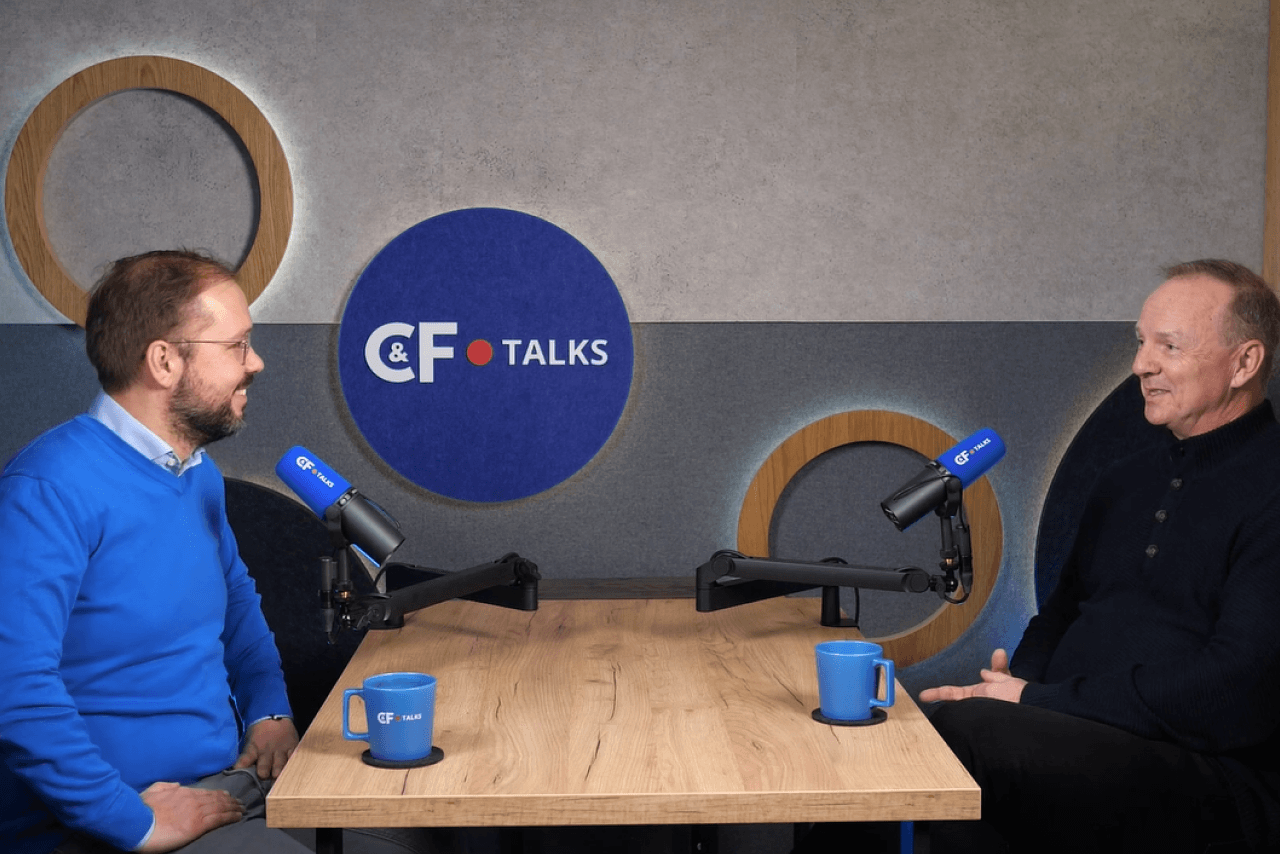
From fragmented metrics to commercial maturity
Commercial excellence rarely happens overnight. In the conversation, Heath Durrans introduces a five-level Commercial Maturity Model designed specifically for the pharmaceutical industry. The model describes how organizations typically evolve: from siloed data and manual KPI reporting to predictive analytics, orchestrated customer journeys, and eventually autonomous decision systems. Each stage builds on the previous one. Without strong data foundations, governance, and repeatable processes, advanced capabilities such as AI-driven engagement or dynamic commercial strategies cannot scale reliably.
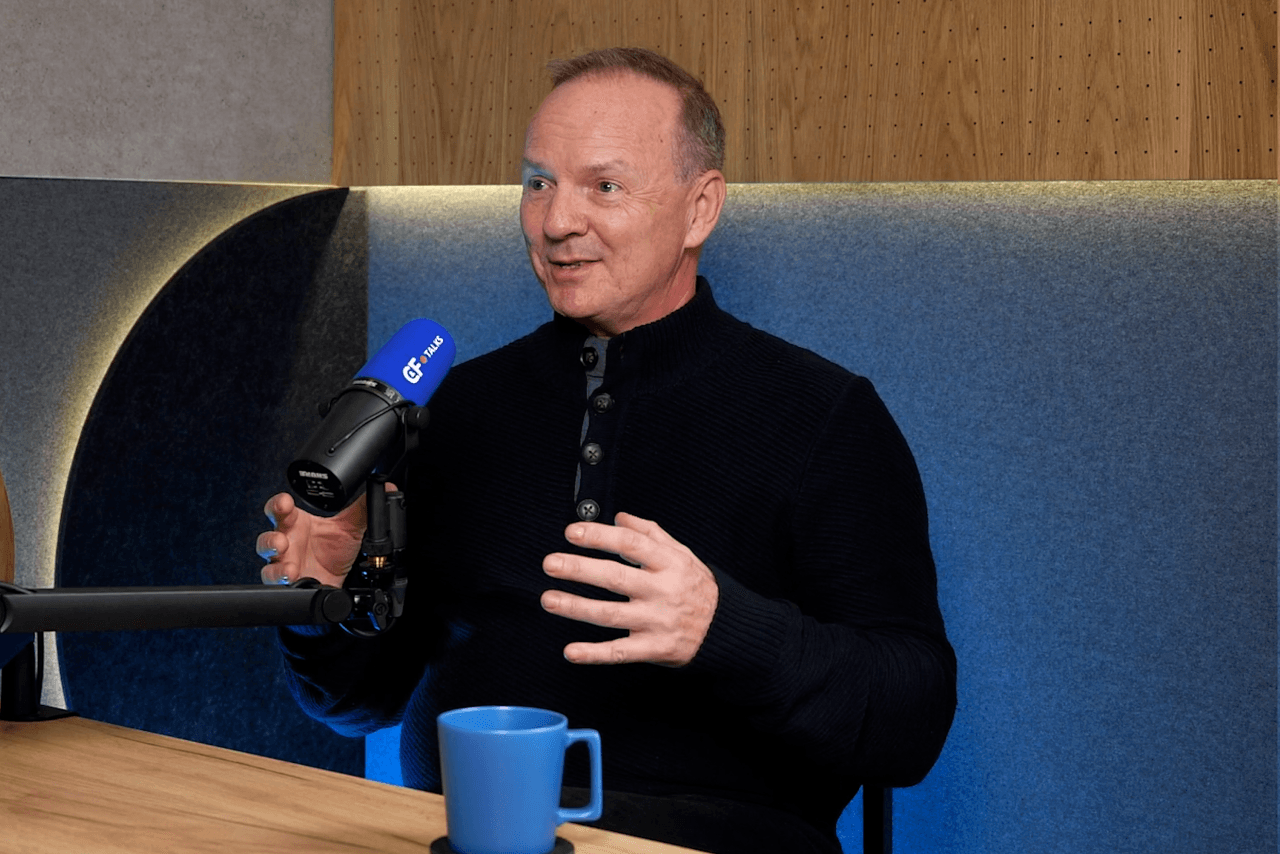
Why truth matters more than ambition
One of the most important parts of the maturity journey is honest assessment. Many organizations believe they operate at advanced levels of commercial maturity, but in practice most still work within foundational or repeatable stages. In the episode, Heath explains how objective assessment helps leadership separate ambition from reality. By identifying gaps across data, processes, and organizational structure, companies can focus on what truly matters: prioritizing improvements, securing leadership alignment, and building a realistic roadmap for the next two to three years.
Check your organization’s level against our proprietary Commercial Maturity Model
Meet the expert

Heath Durrans
Director of Commercial Pharma, C&FHeath Durrans is a cross-industry expert specializing in commercial strategy and analytics for pharmaceutical organizations. As Director of Commercial Pharma at C&F, he works closely with clients to translate complex business goals into practical data and technology solutions. Heath bridges the gap between commercial leadership, industry trends, and technical implementation, helping organizations build scalable capabilities that support measurable business outcomes.
Let’s connect
Our engineers, consultants, and experts are here to help you uncover solutions tailored to your business needs. Whether you’re looking for targeted support or planning a complex digital transformation, we’re ready to help you achieve more.