
The Missing Link in Digital Transformation: Why You Need a Tech Translator
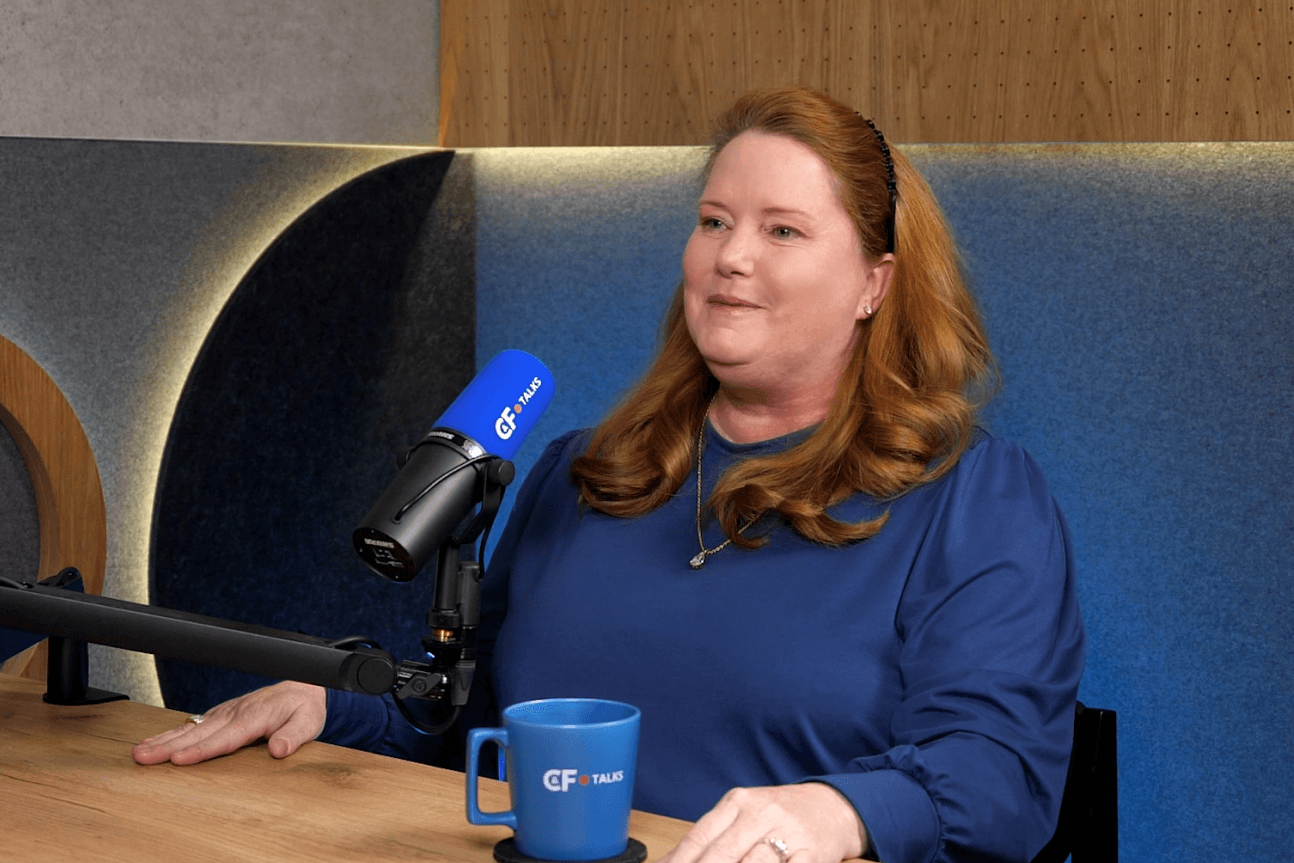
Watch the episode
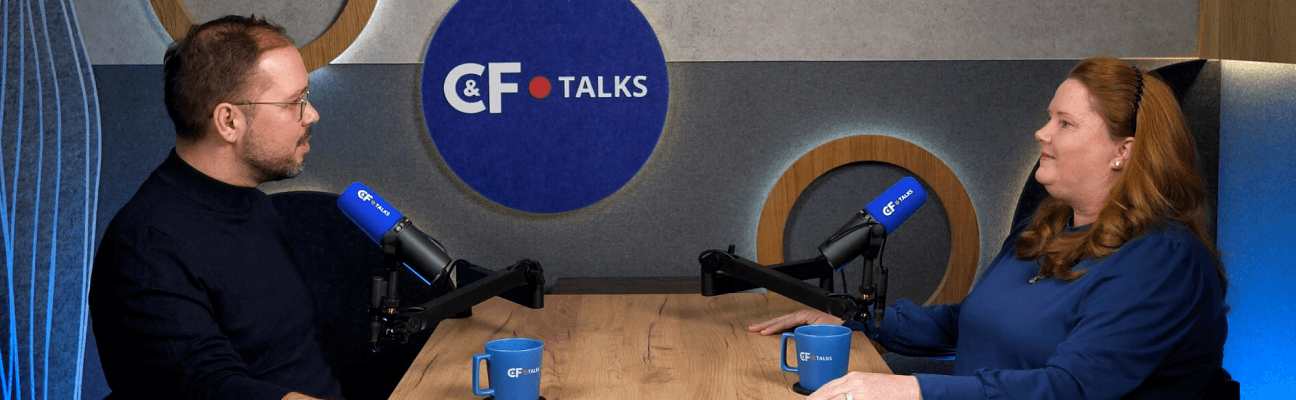
The Missing Link in Digital Transformation: Why You Need a Tech Translator
Maciej Kłodaś [MK]
Hello everyone, my name is Maciej, I’m the leader of Analytics Experience Competency Group at C&F and this is C&F Talks, a place where experts discuss trends, problems, challenges from the perspective of an IT partner. My guest today is Jennifer Scarberry, Strategic Program Leadership at C&F. Hello.
Jennifer Scarberry [JS]
Hello, thanks for having me.
[MK]
Thank you very much for being here. Tell us, today’s topic is about tech translation, but I don’t really know what tech translation is, what the role does, how it brings value to how we work with our clients. So tell us a bit about that.
[JS]
Happy to, and you’re not alone. Most people do not know what a tech translator is and what tech translation means. Ultimately, it’s a newer role that’s just recently evolved.
And over the last 10 years, most organizations have a need for it, but they don’t necessarily know what it is and they certainly don’t have a name for it. If you try to find it as a job search on LinkedIn, you will not find a tech translator right now.
[MK]
No, I’ve searched for that.
[JS]
Pretty much what the tech translator does is it sits in the organization as usually an independent consultant and partner between the C-suite, usually the CEO, and the engineering and the data and analytics team. And what the tech translator does essentially is bridges the gap of communication between, let’s say, an engineering team and a CEO. Typically what you’ll have is siloed organizations.
Even if you have in your C-suite, you have a chief sales and revenue officer and you have a chief technology officer. Both working in tandem, supposed to be on the same objectives, right? Chief revenue and sales officer wants sales and revenue.
Ultimately, that’s their job to deliver the sales number. Technology is to give them the tools and resources to get the job done. The problem is they both act independently with their own budgets.
And they don’t have that interconnect and they don’t have that bridge. And the CEO also does not have the bridge between them. So they’ll get an update on technology from a chief technology officer who’s thinking only in their silo.
They’ll get an update from a chief revenue officer who’s operating only in their silo. And they don’t have anyone that sits in the middle. And certainly not someone that sits at the level with the engineering and the data teams that sits at the table when roadmap and strategy discussions are happening.
And so that’s really the role of the tech translator is to sit there and to have those conversations and to understand what are the true value that a translator can bring to the team. And how do you meet those objectives? How do you break the walls of the silos?
You know, you have to be that person that’s going between each of the silos.
[MK]
How do you identify this challenge? Well, there are companies working without tech translators in place, right? They are doing well. So why do we need a tech translator now? Something has changed over the years?
[JS]
Think of it as its most simplistic form. If I am a CEO at a startup organization and I go to a web developer and say, design a website for me. I just need a website. Design a website for me. An engineer is going to go build a website. And in two, three weeks, they come back and the CEO says, this isn’t what I want.
I need to be able to save my shopping cart. I need to be able to do subscriptions. I need to be able to handle returns. I need to communicate with my customers. And the engineer is going to say, well, you didn’t tell me to do that, right? I built what you told me to build.
And the CEO doesn’t necessarily always know all of the technical questions to ask and understand to make it the most effective product. That’s not their role. Their role is to report to the board, have earnings, make money for the organization, grow the organization.
That’s not their role. They shouldn’t be in the weeds. And so the tech translator has really come about because at the highest scale, you know, large pharma, healthcare organizations, it’s the same issue at a much broader scale because unfortunately, everybody has a budget, right?
So if I’m the CTO, I have my budget and I have my objectives that I need to accomplish. If I’m a chief sales and revenue officer, I have a budget and I have objectives to accomplish. And neither of those involve working together to look to fix the problems in the future, right?
If sales says our CRM is horrible, I need a better CRM. Now, the chief technology officer says, great, I’m going to fix it. Then let’s say it takes 18 months. They come back and then sales says, what do you mean you fixed it? This is nothing like what we need, right? So unfortunately, that’s what happens on an everyday basis.
And then you get into the challenges of who’s the budget holder? Because the chief technology officer wants you to only do work in data and analytics and fix my CRM. They don’t want you to do anything for sales and revenue overall because I’m paying you, right? Get sales to pay for that, but they have a budget.
[MK]
Okay, but what is the difference between a tech translator and a business analyst? Essentially business analyst is someone who is collecting the requirements and can bridge this gap between tech team and this stakeholder who needs a solution, right?
[JS]
Yeah, exactly. So most business analysts and business consultants will come in and they will say, tell us your problems. And they will come back and say, yes, you need to fix these problems.
These are additional problems we’ve identified. Usually it’s not a method that says, here are the solutions and here’s how we do this. They’re usually also not individuals that sit at roadmap discussions.
Because what, for example, if we took the chief sales and revenue officer, they’re looking at fix my problems today. But really a tech translator needs to sit at those roadmap discussions for the three and five-year discussions with the C-suite and also with the technology teams. And so with that, what you have is that bridge to say, yes, there are the needs.
Like a business analyst will tell you, these are your problems. You need to fix these. But they usually lack one or the other.
They have the industry experience or they have the technology experience. They typically lack a combination of both. And the tech translator is really one that thoroughly understands your industry, but they also understand the technology.
So they have operational sales experience, but they also have technology experience. Not to do the actual work, right? I’m not the engineer.
[MK]
Yes, of course. I understand that.
[JS]
But I know enough about the technology to understand these are the challenges that we’re going to fall into. And that’s really a gap where the C-suite, usually the CEOs don’t have that level of information and they shouldn’t really have that type of information. That’s not their role.
[MK]
So tell me how it usually goes. So you are in such role, right? You are the one who is working with the C-suite, identifying problems, linking the dots, things like that.
Do you have any examples, real-life examples on how you brought this value, how you streamlined this process?
[JS]
Yeah, I think one of the best ones is where a CEO wanted to build a go-to-market strategy to expand. So they were a European organization that wanted to expand into the North American market. And they know that to do that, they needed to invest heavily into their technology because they were going to have an omni-channel approach because the pet market itself is a very omni-channel, omni-commerce market.
And they really didn’t have that demand in Europe because they’re a legacy company that depended on traditional brick-and-mortar stores. They didn’t need a high-tech environment. And so in this case, I was brought in to be essentially their tech translator.
It was just a business consultant, sort of like a business analyst. And what came from that was evolution of you really need a tech translator because they did not have anyone that really understood the demands of really setting up all of the technology within e-commerce and especially in a brand-new market worldwide. And the success of that came from being able to streamline efforts because what happens without having someone that sits in the middle is a lot of rework.
And we see that even with some of the largest companies in the world that there’s a lot of rework. You have these great projects, and we need to implement this. AI being a great example right now, we need to implement AI. And you look at how many times has it failed, right? And then you have to rework constantly because it failed. Well, why did it fail?
Did it fail because you didn’t meet the expectations of the internal stakeholders? Did it fail because the tech team wasn’t given the budget or the correct access to really make it the product that was going to be accessible? And the challenge there is that no one’s really at the big table to speak up and say, these are the true challenges that we have as an organization to make this more successful.
It’s more that it’s a downstream. CEO goes to an event and says, this is a great AI product. We need to look at this.
[MK]
Implement it.
[JS]
Implement it, do it, get it done. You have the budget for it. And then it comes back, and it’s implemented, and it’s pushed to sales and marketing. And they go, what is this, and what do you want us to do with this?
[MK]
Why do we need this?
[JS]
And they’re like, the tech team will say, well, we had two meetings with your circle of influence, and we got their feedback. It’s like, but we just give you feedback.
[MK]
It’s feasible, and we have the resources to do it.
[JS]
And so that’s, unfortunately, that’s what happens. And so in today’s world, I think AI is probably one of the best examples of where there is a lot of money that has been spent, and unfortunately, it’s not produced the outcomes that they wish they would have gotten.
[MK]
Well, yeah, because there is a hype, and everybody needs AI nowadays. Our solution is based on AI, but nobody identifies the real value behind this AI. So why do we need that?
We don’t know, but we need it now. Because it’s a hype. So tell me, two questions. One thing is how to build this awareness in large organizations, that there is a need for a role like that, and how to communicate the value. And the second question is how to find people like that.
[JS]
The first question might be the easier one than the second.
[MK]
I know.
[JS]
You weren’t able to find them on LinkedIn, right? For a tech translator. The first one, I’d say one of the easier ways to identify that you need it is that if you’re a CEO and you’re listening to this podcast and watching this podcast.
[MK]
Hopefully, you are.
[JS]
Yes, thank you. I think one of the biggest thing is that you recognize that perhaps you’ve had some of these challenges. I use AI as an example because it resonates the most right now.
There’s a significant investment that’s been made in AI tools and resources. If you just put aside governance, we’re talking about just strictly tools and resources and products to make the organization more efficient. And at the end of the day, most CEOs will look right now, and if they had to ask themselves, okay, how much money have I spent in the last three years developing AI tools?
And right now today, how many of those projects in the last three years have been what I would deem successful? And the problem with that is I’ve asked that question to CEOs, and first, they don’t know the answer because the challenge has not been to ask that question because you typically don’t measure ROI on AI at all, right?
[MK]
And are they ready, to be honest?
[JS]
Might be. Now is the time where the advances for AI are at a critical point where they know that they have to do it. It is a critical part.
It’s usually a common discussion within the board of directors, and they want to know what’s being done. But if you can look at, as an example, the last three years, look at your spend on AI, and of those projects, what, if any, have produced a viable product that’s being used within your organization? And if that’s missing, then that’s the very first giant beaming flag that just says, help me, help me.
[MK]
Okay, I’ll be the devil’s advocate here. But for the last, I don’t know, a year maybe or more, this was more or less a ballpark, right? So everybody was testing that.
Everybody was just looking, okay, what we can do with AI, right? Of course, there were projects trying to solve some challenges, but essentially everybody was testing AI. But now we came to the point that we really need to build something that is giving the value to the organization, right?
[JS]
Not everybody will, but I remember first cell phone in the car, right? The big giant brick, right? We had to have one.
It was the new shiny toy. I think of AI several years ago as a new shiny toy, right? And if you had it, you were really on the cusp, and you were on the front edge of the forefront of technology.
And so you just, you did it. It costs a ridiculous amount of money. If I wanted to make a phone call in my brick car phone, you know, it was literally like, I’ll be home in two minutes, I’m going to hang up, right?
And unfortunately, it just, it wasn’t a success because it didn’t meet the demands of, you know, what the market needed. And now it’s evolved to what it is today. I think there will be a point that organizations, kind of like to your second question, they’ll be able to develop their own tech translator teams and identify them within their organization.
Right now, because they haven’t had that exposure, they’re not really looking for and developing those people that truly at the end of the day, you’re bridging the gap. That’s what I always say with tech translation is that you’re bridging the gap between the silos of the organization to be that one voice, typically to the CEO, to say, these are the challenges that are going to have to be overcome. These are the things that perhaps your team do not want to say to you.
Their biggest challenge might be that I have a budget for an AI product, but it doesn’t address these four other items that it touches. And those aren’t my budgets. I’m not the budget holder there. That’s our COO. That’s an operations function because it falls to distribution. Or that’s a sales and marketing issue because it falls to them.
But those internal conversations, sometimes they don’t happen. They don’t happen with enough frequency. And there’s not always the appetite in all of their responsibilities to say, let me add more workload and sit in on more meetings to talk about where these challenges are.
So you really have to be able to deep dive into an organization and understand the true value of products. And we’re not looking at AI solutions or technology solutions or data solutions for what are we fixing in six months. C&F can do that and help you fix problems in six months, but it’s more with tech translator role.
It’s where do you want to be in three years and five years and let us help you get there faster, more efficient. And at the end of the day, be able to answer that question. Okay, for three years, I spent this on development.
Now, what products do I have to show for it? That’s really the role.
[MK]
Or how do we identify the right problems in the organization? Okay. So tell me, essentially, what do you do as a tech translator? I mean, I would like to understand how the process looks like because I hardly believe that you have the meetings with a CEO on a weekly or monthly basis and talk to a CEO about organizational problems and then you go to a CTO saying, okay, listen, we have a mission here. We have a strategic problem here. We need to talk about a solution. How does it look like?
[JS]
Well, first, I don’t think any CEO will have time to do it. Or they’d be checked out right now saying, okay, you want how much time each week? My EA will block you permanently. It won’t happen.
It’s really about being a high-trust, high-valued partner within the organization and having the flexibility and the ability to sit with each department and not needing to ask permission to get introduced to another part of the organization. It’s from sitting in the meetings, typically, show me your roadmap, discuss with me what your plans are, what your objectives from the C-suite, understanding from a high level, where do you want to be in 3, 5, 10 years? What do you think your current challenges are that are preventing you from being there?
And then introduction to CTO, CRO, COO to say same questions. What do you think your problems are? Then the real work starts. The real work is then you get into the organization and you have the meetings and you sit at the tables with the people that get the work done. So we’re not talking about senior directors at a high level. Yes, we’re having constant conversations with them, but we’re understanding what are their products right now.
Are those products going to pass or fail on a new system? Are they going to meet the needs of the organization? Are they going to meet the needs of operations? Are they going to meet the needs of sales and marketing? Are they going to meet the needs of finance and healthcare? Are they going to meet the needs of pharmacovigilance and regulatory affairs?
And you get into product development and all of those channels. So you have one person who’s talking to all of those departments. And then essentially there’s executive check-ins is what we call them. And so usually every four or six weeks, these are the challenges. This is what’s been identified. And typically you start off with a small project.
Help me just identify this. I want to see what this is all about. Do a couple-month project. Give an executive presentation back and say, these are the ways that we can help you. Typically that will evolve into, okay, yes, help us get this done. Help navigate these waters.
And at the same time, organizations can then say, help us then to develop the people to do this job going forward because ultimately that’s the future.
[MK]
Someone needs to take over.
[JS]
Someone really needs to take over. And they most likely have someone in their organization that could just use some additional development or training but could be a great asset that they already have.
[MK]
What are the biggest challenges from their perspective? Because I can see that there are at least two levels of problems in the organization. I mean, at the organization level, we have operational problems.
We have procedural problems. Then on the team level, senior stakeholder level, who have budgets, they need to build some solutions. But the friction is that they bump into those organizational problems.
So you need to address those bigger problems first in order to get real value from those, let’s say, AI projects you will be delivering later on, right? What other challenges you see?
[JS]
Biggest challenge is people. And there’s an inability to communicate cross-functionally. And most people, we take ownership and accountability for our objectives, right? These are my objectives. This is what I bring.
[MK]
With being taught that exactly, working in bigger organizations, right?
[JS]
Yes, yes. So my job security is tied to accomplishing X, Y, and Z, and that’s it, right? So the biggest problem is really people and the communication. And some people will say, oh, well, it’s easy. I can just fix that. Not really, because it’s a lot deeper than that.
And typically when I first come in and I’ll have a meeting and I’ll understand the objectives, then I’ll bring a group of people together from all different arms and we’ll have a whiteboard and I’ll say, these are two projects we’re going to look at accomplishing first. All of you in the room are here to tell me why it’s going to fail. That’s where we start.
And most people would not think that that’s not how you progress. That’s not how you get a project accomplished. But that’s what you want to do with this group because everyone in that group is arms crossed. This is not going to work. Oh, we’re doing another AI project. Yay, I can’t wait.
You know, it’s this, right? And as soon as you’re not pushing an idea at them, instead you’re telling them, you are the experts in the room. Tell me why this will fail. And what you’ve just done is provided the blueprint on how you fix the problems and make it work within the organization.
[MK]
Just do the opposite.
[JS]
Yeah, and everybody wants to tell you why it’s going to go wrong, right? Everyone’s going to say, oh, well, this won’t work. From a sales side, this won’t work for this reason. From regulatory, it won’t work. This won’t work for this reason. From the technology side, there’s no way this is going to work.
It’s going to take us two years to build this, right? It’s that type of thing. But when you start with that as the approach, that’s one of the key ways that I found success in tech translation is it immediately breaks down one of the biggest challenges, which is people and communication.
Because it’s the elephant in the room. I don’t want to tell you, your product sucks. It’s not going to work. It’s going to fail, right? Nobody wants to say that part out loud. They’ll say it in their internal breaks, and nobody wants to hear it, right? So that’s one of the biggest ways that you can start, and you’re helping them to solve their own problems.
[MK]
Okay. What I see now is kind of a change in the paradigm of how the enterprise works. Because for years, decades, we’ve been taught and building around departments, building around KPIs and targets, built for certain departments.
Of course, there were targets on the organizational level. But still, the department’s senior stakeholders, whoever, are focused only on their part. So they are building this silo around them, right?
And now we are trying to change that, break this cycle in order to be one company cooperating with each other towards this mutual goal, right? So this is how I understand we are changing the way organizations work.
[JS]
And we’re doing it in a way where it doesn’t cause friction initially. Because if you say, we’re going to try this totally new approach, and we’ve never done this before, you know, it will never happen, right? So instead, what we’re saying is we’re going to look at this as if we change our approach, what would that look like?
And what would the outcome be? And what drives a higher success rate? What drives a reduction in rework? What drives the shelf, the proverbial shelf, of all the money that we’ve spent on products that we never deployed? Because once we started to test it, we got feedback that it was horrible, and we’re not going to use it. And so we put it in the shelf and left it in there.
And so to your point, I think part of the bigger challenge is that after you have a tech translator in place, then you can begin to build KPIs that include maybe 10% tied to, how are you going to help drive delivery of this product? Across the organization. Yeah, because in most cases, regulatory affairs is one that most people do not think about when you’re driving a new AI product.
But regulatory affairs is going to have a lot of opinions about what gets done. And unfortunately, they’re usually one of the last people that are asked, right? And they have highest impact within their approval.
[MK]
It’s a go or no go.
[JS]
Yeah, and so if they say no, back in the shelf. And unfortunately, could have been worked on for a year, two years, three years. And so with KPIs, I think you bring up a great point because KPIs have to then begin to be developed.
But first, you have to prove it. Because if I was a CEO at any organization, and you first came in and talked to me about tech translators, and I’ve never heard of it, and I can’t even find a job for it on LinkedIn, then I’m not going to change my organization. So that’s where the first step is to work with an organization like C&F to say, come in, let’s do this, let’s try this.
I want to see how you can help me make an impact in my organization in advancing our organization in technology-driven efforts. So whether that’s AI or data modeling, their CRMs, whatever their particular challenges and goals are, it doesn’t have to be 12 different things they want to fix, it can be one. Let’s just look at one.
[MK]
Okay. But since it’s a very new role, tell me how did you become a tech translator?
[JS]
Yeah, kind of by accident. Definitely. I spent, of my 30-year career, I spent the first 20 years in executive leadership roles, primarily in operations, sales, management, and worked with a lot of healthcare life sciences companies, large pharma organizations, and diagnostics, and animal health.
And within that, I learned a great deal, but I always had this inclination towards technology. You know, I would be the sales leader and the vice president that would say, what we’re doing doesn’t make sense. I’m losing 25% of the productivity of my salespeople on a daily basis because they’re duplicating efforts just because we’re making them check boxes and CRM that nobody tracks and nobody measures.
[MK]
Everybody likes you.
[JS]
It drives me nuts, right? It’s that part of me that’s just like, we don’t need to do this, but we continue to do it because at some point we made a decision, this is what we’re going to do. So I always had that drive and inclination to technology.
And I spent the last 10 years of my career, where at first I founded a business where I was focused on helping startup organizations and companies that were looking to make a go-to-market entry into the US. And what came from that was an evolution into very deep dives into technology, working with API, AI data, data aggregators, data cleansing, and really a heavy focus on technology, which again, that’s not my background. But because I had this strong understanding of the operations of the business, it naturally became a short learning curve because it was something I loved, which was technology, to something I already knew, which was how a business works and what a consumer needs and what a veterinarian or a doctor needs and what they want and expect from us.
And so that became the bridging the gap and became this role where I would say, eh, I’m a technology consultant. And then it was, well, that’s not really what I do. I actually translate because in that example I gave of where I sit between the CEO and a website developer in a very simplistic example, all I’m doing is I’m translating because the CEO does not want or need to understand the code backgrounds of what goes into a website development and how a shopping cart works.
And they don’t need to know or understand that, right? They just need to know that how easy or difficult is it for that function to get built. And also when you build that functionality, how does it impact other branches of the business?
Because that’s the bigger picture problem with technology is that you can say, push this AI product downstream, but the impact to the business is so multi-armed that it typically lacks a strategy to that multi-arm where you miss things like regulatory, the regulatory people in the world, you’re welcome. But to your point earlier, they are absolutely the go, no go. And they probably haven’t been in the room once.
[MK]
No, nobody invites those departments in the first place.
[JS]
Yeah. So I got started by sitting in the rooms and understanding that there was this deep need for a translator that understood tech and operations enough to talk to both ends of the spectrum. You can have conversations with the engineers.
I cannot do what they do. They’re brilliant people. They’re fixing the problems. They’re writing the software. They’re making the products work, right? They’re building these phenomenal AI machine learning, large language programs. They’re doing all this work.
[MK]
But you understand them.
[JS]
But I understand them, right? I can’t do their job. They’d do a phenomenal one on their own without me. My job is to translate what they’re saying and how it impacts the business to the CEO. And ultimately, the CEO doesn’t want to hear those details. They don’t care.
Again, I’d get blocked by their EA if I went in and gave them a technical presentation of how it’s going to work. But instead, just give them an executive summary of you don’t want or need to know all the details. Here’s what you do need to know. These are the ways it’s going to function.
[MK]
I guess, I suppose that there are people like you in the world. So from your perspective, what is the future of this role? How will this role evolve in today’s or future organizations?
[JS]
Yeah, I think it’s a great question. And I don’t know. I really don’t.
It’s such uncharted water that even to come up with the word translator stumbled about because I kept trying to explain to my family what I do for a living. You start off with technology consultant and your family hands you the TV remote and says, great, can you fix these five things that are wrong with my TV?
[MK]
Or with a printer.
[JS]
Yeah. Here’s my cell phone. Something’s wrong with it. It’s like, that’s not what I do. And so instead, translator really came about from that. And I’ve seen very few other individuals that understand that, yes, that’s what I do. But there’s this maybe this hesitancy to call themselves that because they are more analysts and they are more consultants because they’re really focused on just technology.
They’re a technology consultant because their expertise is in technology, but they do not have a business or an operations background. Or more importantly, they don’t have that industry specific knowledge and background. And it’s very difficult to take someone that has this high tech background, but they worked in automotive manufacturing and say, OK, come over to a health care or life sciences company and fix their problems.
If you don’t have that deep understanding of the industry, then that’s where you’re severely challenged. And so I think C&F has done a wonderful job of really finding those individuals that have this very deep industry knowledge and experience, and are not siloed to just manufacturing or just sales. But they also have a very deep understanding of technology.
So being able to bring those individuals to CEOs and to clients and corporations, I think that’s the big difference. I think the future is more people will jump on the bandwagon as it starts to become more of a household name. And when you can find it on LinkedIn, then maybe, you know.
[MK]
It will be the buzzword of 2026.
[JS]
I didn’t trademark it. Maybe I should have.
[MK]
Hopefully you will help us to find those people and train those people here at C&F.
[JS]
For sure. And we’ve got a great team in place right now. So there are in multiple industries and they’re highly intelligent. They’re very informed. They’re very knowledgeable about their industry. They understand multiple layers of the industry themselves inside and out.
And crucially, they truly understand the technology. And that’s, I think, really where I’ve said it since, you know, having this relationship with C&F, that C&F is the best kept secret in the industry. Because it’s true.
People don’t know. And then there’s this small group of people that usually the data and analytics team, right? The engineering team, they know who C&F is.
They know the miracles that C&F performs. They know how critical C&F is to the backbone of their merger acquisition or their integration to new technology related to data. But they know no other part of the organization knows who they are.
Right. Most CEOs that have worked with C&F have not spent a traditional amount of time. It’s usually a tell me who you are. Tell me why I spend so much money with you. And what are what is it that you do for my organization? And it’s usually a very one way conversation.
And this way and having even this discussion with you is to hopefully open some discussions about the other ways that we can help the organization on a much broader plane.
[MK]
Brilliant. Maybe we’ll be able to ask some questions instead of only answering them.
[JS]
That would be great.
[MK]
Okay. Thank you very much, Jennifer, for being here. Thank you, guys.
Please do subscribe to our channel and leave a comment. Tell us, do you like our content? Do you like the way we present it?
And hopefully you’ll tune in to another episode of C&F Talks. Thank you very much.
[JS]
Thank you.
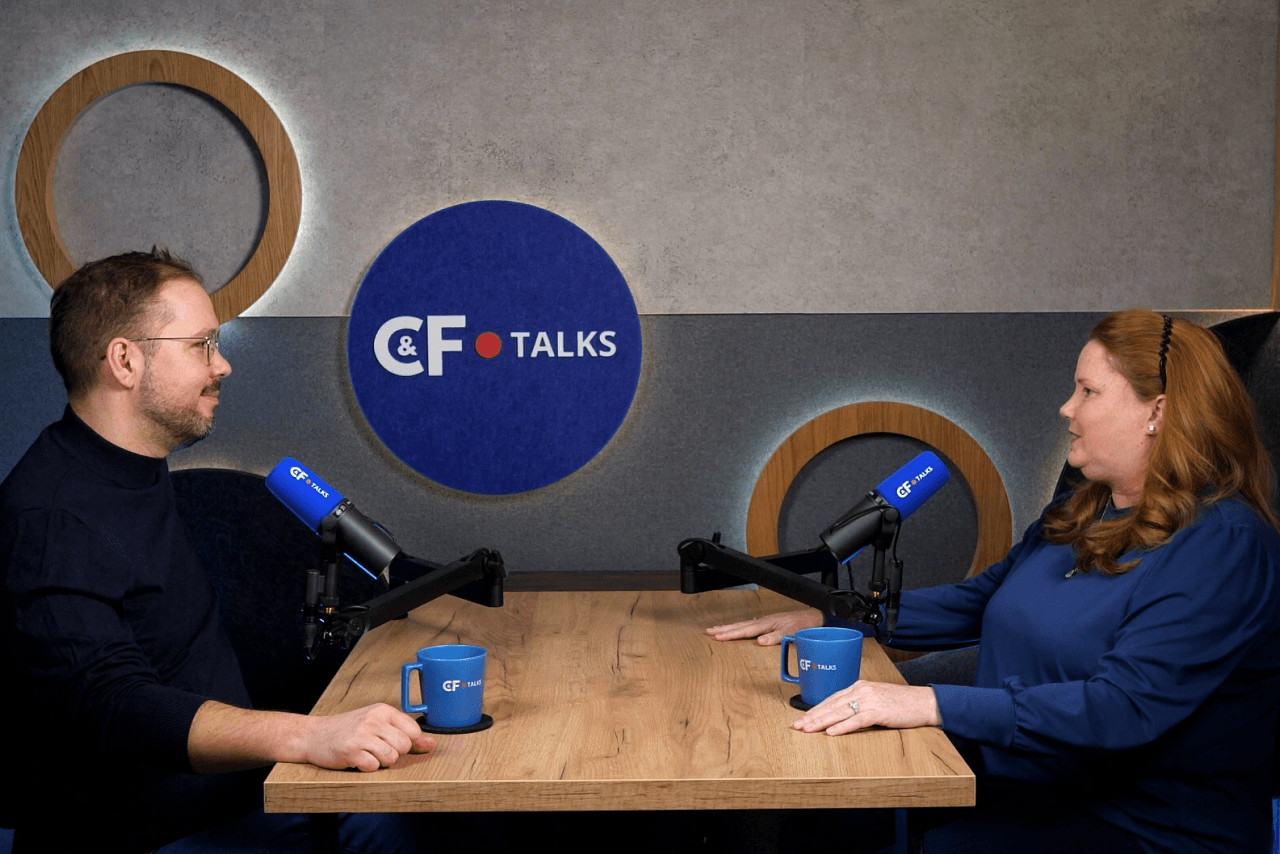
Why organizations need tech translators now
As technology becomes central to business strategy, the cost of misalignment grows. Teams often work toward different goals, using separate budgets and priorities. The result is rework, missed expectations, and solutions that don’t deliver value. The tech translator sits between leadership and execution teams, ensuring that business goals are clearly understood and reflected in technical decisions. This role helps organizations move from disconnected initiatives to coordinated efforts that support long-term strategy.
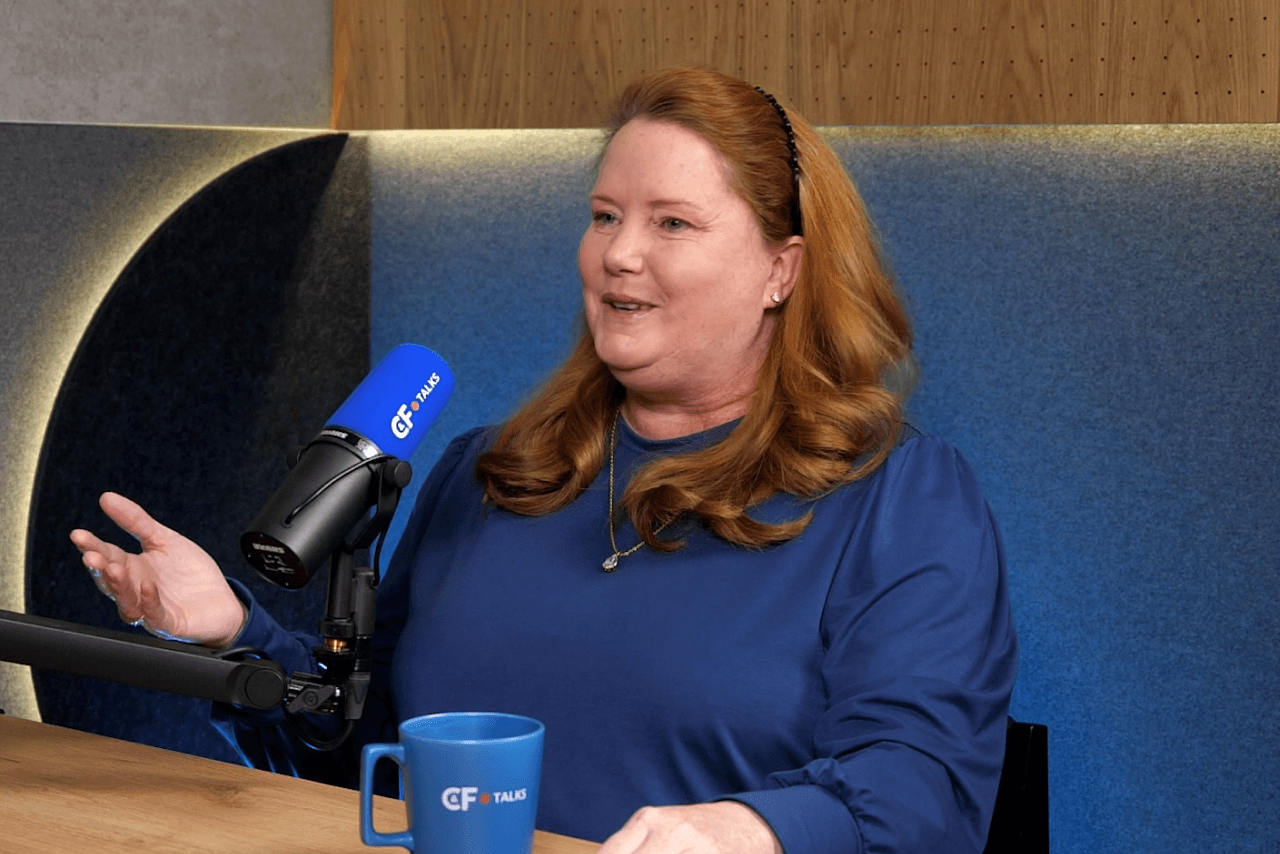
From AI hype to real business value
AI is a clear example of the problem. Many companies invest heavily, driven by market pressure rather than defined outcomes. Solutions get built, but adoption lags, or the impact is unclear. A tech translator helps shift the focus from “what can we build?” to “what problem are we solving?” By aligning stakeholders early, including often-overlooked teams like regulatory or operations, they reduce the risk of late-stage failure and ensure that investments lead to tangible results.
See how we help animal health organizations bridge the gap between strategy and execution with the right mix of data, technology, and industry expertise.
Meet the expert

Jennifer Scarberry
Senior Manager, Strategic Program LeadershipJennifer Scarberry is a strategic program leader specializing in bridging business and technology functions. She works closely with executive teams to align long-term goals with practical execution, helping organizations navigate complex, cross-functional challenges. Her approach combines animal health & pharma industry experience with technical understanding, enabling her to identify risks early, break down silos, and guide initiatives toward measurable outcomes.
Let’s connect
Our engineers, consultants, and experts are here to help you uncover solutions tailored to your business needs. Whether you’re looking for targeted support or planning a complex digital transformation, we’re ready to help you achieve more.