

Pharma and animal health companies run some of the most complex rebate programs in any industry, yet many still rely on spreadsheets to manage them. A dedicated rebate management solution eliminates calculation errors, fraud exposure, and data quality problems that spreadsheets cannot solve at scale.
What Is Rebate Management and Why Does It Matter in Pharma?
Rebate management is the process of designing, calculating, tracking, and paying out rebates as part of a company’s commercial and pricing strategy. In pharmaceutical and animal health businesses, this process is anything but simple.
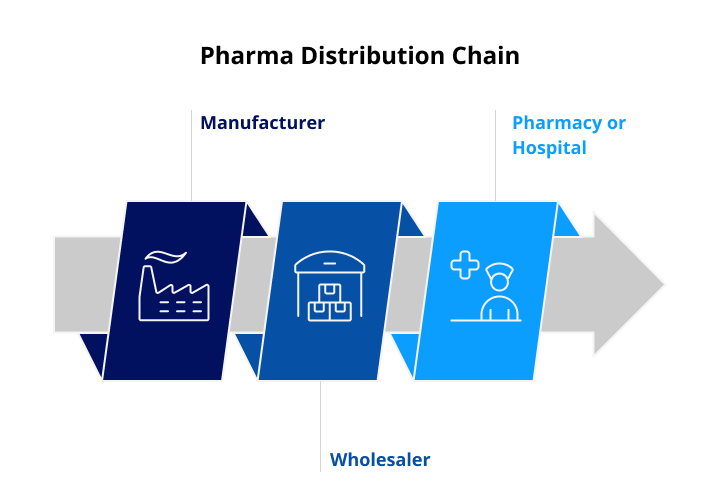
Drug manufacturers sell to wholesalers, pharmacies, and hospitals. Animal health companies distribute through regional distributors to farms, producers, and veterinary clinics. In both cases, rebate programs are the primary mechanism for rewarding purchase volumes, building customer loyalty, and staying competitive in markets where price pressure is intense and contracts are long-term.
The scale makes it serious. One animal health company we are familiar with manages rebate calculations across more than 10,000 indirect customers, processing upward of €2 million in monthly payouts; with purchasing groups adding another layer of complexity on top. The multi-tier distribution model in pharma makes rebate tracking significantly more complex than in most industries.
Why Are Spreadsheets Still So Common Despite Being Risky?
Despite the complexity, Excel remains the default tool for rebate management in many pharma organizations. The reasons are familiar: it requires no procurement cycle, every analyst already knows it, and it “works”, at least until it doesn’t.
The problem is that at any meaningful scale, spreadsheets introduce four distinct risks:
- Data integrity failures: dispersed sales data from multiple wholesalers arrives in inconsistent formats, and manual consolidation introduces errors that compound over time.
- Calculation errors: multi-tiered rebate rules based on turnover, product mix, seasonality, and contract milestones are difficult to encode correctly in formulas and nearly impossible to audit.
- Fraud exposure: without automated cross-validation, it is genuinely difficult to verify that the sales data reported by distributors is accurate. Discrepancies: whether intentional or not, often go undetected until an internal audit.
- Invisible revenue leakage: companies frequently do not know the amount of revenue lost to overpayments or missed recalculations until long after the fact.
The principle here is simple: garbage in, garbage out. No matter how sophisticated the pricing policy, it can only be as effective as the data feeding it.
Worth noting: the FMCG industry largely solved this problem years ago, migrating rebate and loyalty program management to SaaS platforms with built-in data integration. Pharma has been slower to follow, and animal health even more so.
What Does a Proper Rebate Management Solution Actually Do?
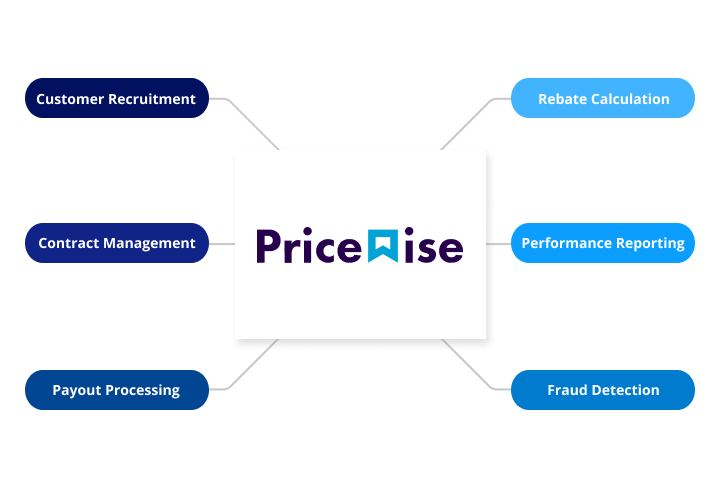
A purpose-built rebate management solution replaces the fragmented spreadsheet process with an end-to-end workflow covering:
| Process Area | Spreadsheet Approach | Dedicated Platform |
| Customer recruitment | Manual proposals | Simulation tools, tailored contract proposals |
| Contract management | Files across email/SharePoint | Centralized, signed, tracked in one place |
| Rebate calculation | Manual formulas, error-prone | Automated rules engine, fully auditable |
| Payout processing | Manual, delayed | Automated, on-time, with approval workflows |
| Performance reporting | Static exports | Real-time dashboards, ranking, geography |
| Fraud detection | None or post-hoc audit | Automated cross-validation of distributor data |
A platform like C&F’s own PriceWise covers this entire lifecycle: from onboarding new customers into a rebate program through to automated payout, with the ability to define new calculation rules without involving IT.
How Does Data Quality Affect Rebate Program Outcomes?
The data integration layer is where most pharma companies have the largest gap. Wholesalers and distributors deliver sales data in varying formats, frequencies, and levels of completeness. Without a structured process for ingesting, validating, and reconciling this data, even a well-designed rebate program produces unreliable results.
Data catalog and integration services address this at the source, ensuring that the data flowing into a rebate management system is clean, consistent, and timely. This is not an abstract technical concern. Payout errors caused by data irregularities have direct financial consequences, and in regulated industries like pharma, they also carry compliance risk.
The concept behind this is sometimes called SISO in the data engineering world: Single Input, Single Output. Feed your systems with high-quality data, and they will produce high-quality outcomes. The inverse is equally true.
Beyond Rebates: What Else Can Sales Data Do?
Once data integration is in place and sales data is flowing reliably, the same foundation supports a broader set of commercial applications:
- Advanced data analytics can identify which customers are underperforming relative to their contract targets and flag them for proactive outreach before the rebate period closes.
- Recommender systems can suggest next best products or portfolio extensions for distributors based on purchase pattern analysis -turning rebate data into a commercial intelligence asset.
- Next Best Action solutions take this further, enabling sales teams to act on data-driven signals in real time rather than reviewing static quarterly reports.
The rebate management process, when properly instrumented, becomes one of the richest sources of commercial insight available to pharma and animal health companies.
How to Choose the Right Rebate Management Tool
Selecting the right platform depends on several factors specific to your business model:
- Number of customers and SKUs: a solution designed for 200 accounts will not perform well at 10,000.
- Complexity of rebate rule: tiered programs based on multiple variables (volume, product mix, seasonality, purchasing group membership) require a configurable rules engine, not a fixed template.
- Integration requirements: the platform must connect to your ERP, CRM, and distributor data feeds without requiring heavy custom development.
- IT involvement for rule changes: in pharma, commercial teams need the ability to modify rebate structures quickly in response to competitive moves. Look for low-code or no-code configuration capability.
- Audit trail and compliance: in regulated industries, every calculation must be traceable. This is non-negotiable.
PriceWise is built on the OutSystems low-code platform, which means new calculation rules can be created with minimal IT intervention, an important practical consideration for commercial teams that operate faster than IT project cycles.

Next Best Action in Pharma Sales
Learn how pharma companies use AI-driven insights and predictive analytics to deliver Next Best Action at scale. A practical look at driving engagement and results.
Summary
Rebate programs are one of the most effective tools pharma and animal health companies have for building customer loyalty and driving revenue. The problem is that their complexity -multi-tier pricing, large customer bases, dispersed distributor data -makes them genuinely difficult to manage without purpose-built tooling.
Spreadsheets introduce data quality risk, calculation errors, and fraud exposure that are difficult to quantify precisely because the losses often go undetected. A dedicated rebate management solution solves these problems at the operational level while simultaneously generating commercial intelligence that spreadsheets simply cannot produce.
If you are evaluating options, PriceWise is worth a close look -it was designed specifically for the complexity of pharma and animal health rebate programs, and it covers the full lifecycle from customer recruitment to automated payout.
FAQ
What is the difference between a rebate program and a discount?
A discount reduces the price at the point of sale. A rebate is a retrospective payment made after the customer meets predefined purchase conditions -volume thresholds, product mix targets, or contract milestones. Rebates are more powerful as loyalty tools because they create future commitment, but they are also significantly more complex to administer.
Why can’t standard ERP systems handle rebate management?
Most ERP systems include basic rebate functionality, but they are not designed to handle the complexity of multi-tiered, condition-based programs across thousands of customers and hundreds of SKUs. They also lack the commercial-facing features -simulations, customer portals, real-time tracking -that make rebate programs effective as sales tools rather than just accounting entries.
How does rebate management relate to fraud risk in pharma?
Pharmaceutical wholesalers report secondary sales data back to manufacturers as the basis for rebate calculations. Without automated cross-validation, there is no reliable way to verify this data. Overstated sales volumes, duplicated transactions, or misattributed purchases can go undetected for months. A dedicated rebate management platform with built-in data validation closes this gap.
What does implementation typically involve?
Implementation of a rebate management solution typically covers data integration setup (connecting ERP, CRM, and distributor data), migration of existing contract terms, configuration of calculation rules, and training of commercial and back-office teams. Cloud-based SaaS solutions like PriceWise reduce the technical overhead significantly compared to on-premise deployments.
Is rebate management relevant for smaller pharma companies?
Yes -in fact, smaller companies often have more to gain, because they are less likely to have dedicated back-office resources to absorb the manual workload. The risk of errors is proportionally higher when a small team is managing complex programs in spreadsheets. Purpose-built tools are increasingly available at price points that make sense for mid-market organizations.
Would you like more information about this topic?
Complete the form below.