
Is the Animal Health Industry Ready for AI?

Watch the episode

Is the Animal Health Industry Ready for AI?
Maciej Kłodaś [MK]
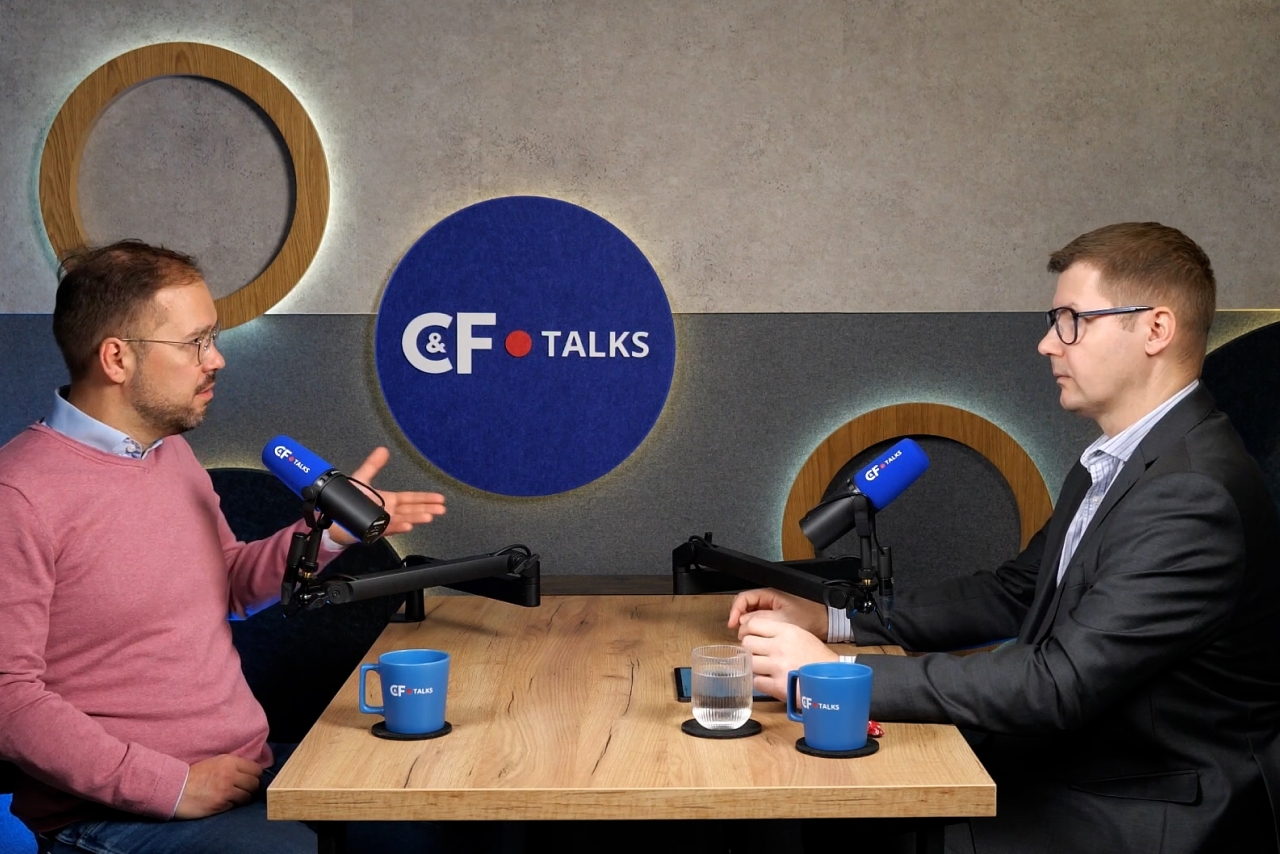
Hello everyone, my name is Maciej, I’m the leader of Analytics Experience Competency Group and this is C&F Talks, a place where experts discuss challenges, solutions and ideas from the perspective of an IT partner. My guest today is Michał Osuch, BU Head for Animal Health Commercial. Hello Michał.
Good morning, thank you for having me here again. So today’s topic is very interesting to me, but I think for our audience also. Is animal health industry ready for AI adoption?
Michał Osuch [MO]
Indeed. And as usual, the answer is, it depends.
[MK]
I love the answer.
[MO]
Pretty consulting one, isn’t it?
But before we answer or before we try to answer this question, let’s take a step back and first of all, see where we stand in terms of the AI and define the readiness. Hopefully, and I hope we’re already past the moment where the AI hype was on the top. Since a few years, we’re seeing a tremendous number of projects being closed and failed in terms of the lack of deliverables.
I believe it was an MIT report that said that between 60 and 90% of the projects failed or from the different degree, 70, 80% of them delivered no results or below the expectations level. Or they don’t go past the POC stage, for instance.
And they also mentioned the reasons or the main reasons why they failed. They mentioned the scaling phase, they mentioned unrealistic expectations, like solving all the problems of the world or lack of those expectations, insufficient data quality, lack of infrastructure, and probably what is most important, resistance of the organization or the lack of willingness to change. So all those organizations that we mentioned that failed, they were not ready to implement AI projects in their organizations.
So how do we define readiness of an organization? They have to have clean data, technical skills, robust cloud infrastructure, governance, and probably what is most important, willingness to adopt AI solutions into their operating model. So this is no longer a hype.
This is no longer fancy tools. This is no longer chat GPT preparing your email. This is really a strategy, how to monetize and get value out of the AI solutions that will last in the organization for more than duration of a POC or MVP implementation.
[MK]
Let me stop you for a moment because I know that this AI bubble is over. Now we are trying to get value from AI implementations. So there is still a lot money there in the budget.
The main, and we are working for animal health and you are working for animal health for many, many years now. So you’ve seen a lot of examples how this hype was implemented into, not the strategy, but goals in the organization. The main problem I’ve seen, and this is the question to you, is about use cases.
What to expect from the AI? We need to implement AI because there is a target for that, but we don’t really know where or what this AI needs to do in order to bring value to the organization. What do you think?
What is your perspective? If you see how we are working with our clients, is this the paradigm shift? Or there is higher level of maturity when it comes to AI adoption?
[MO]
Very good, complex and long question.
[MK]
Thank you.
[MO]
Let’s chunk it into pieces. You mentioned about the budget and the expectations around AI. Based on human pharma examples, so the more wealthier sibling of animal health, there is somewhere between 5% and 10% of savings or revenue upside to be gained.
For animal health, if they follow the same path, we’re talking about roughly $3.5 to $7 billion in a horizon of give or take five years from now. So there is a lot. There is a lot to gain or save just by implementing accurately AI solutions into the infrastructure, into the ecosystem.
Animal health as such is said to be between 5 and 10 years behind human pharma, mostly due to smaller capitalization of the organization, silos, lower standardization. But AI gives everyone equal chances to start. Everyone generally starts from the same situation.
The models, the technology is made available for everyone at the same time. We are expecting that this will give animal health a chance to catch up with human pharma. And this is kind of a chance they never, never had before.
In order to answer the second part of your question, we need to divide the animal health market into at least three elements, three pieces. And they are at the different maturity stage. That’s why it is important to differentiate between the manufacturers, so the company’s manufacturing drugs, veterinarians and clinics, and the animal health producers, so farms, broilers.
We need to distinguish that into the three groups. We’re talking about the manufacturers, so the companies producing the drugs. We’re talking about vets and clinics.
And we’re talking about the large animal producers. They’re at a different state of maturity and they’re at a different state of AI readiness. And you asked about the examples, how AI can help them to become a better, wealthier, or more profitable company.
There are multiple examples. If we start from the vet clinics, we know, and that’s a worldwide problem, there is a staff shortage. There is a new generation of veterinarians coming in, saying, just being very nice to them, they don’t want to work after hours.
And if you combine those two, the level of service offered to the pet owners is decreasing. AI can significantly help them with managing their documentation, with helping them in radiology, in describing image descriptions. They can help them to take better notes and well manage the documentation inside their clinics.
Some researchers say that can save 15, 20% of their time during the day that then can be spent to work with more patients during the day.
[MK]
Okay. So what are the challenges? What’s stopping them from implementing AI in their everyday workflow?
[MO]
There are multiple reasons. They’re slightly different for each of those groups. The vets, 80% of them are interested in having an AI solution inside of their clinic, but only 40 or less than 40% of them is actively using something that you can call an AI.
And again, we’re not talking about ChatGPT helping you to draft an email, we’re talking about the real value, real benefit from having an AI solution. Most of the, or the biggest reason is really lack of trust. If you don’t trust your data in terms of manufacturers, if you don’t trust your sales data, if you don’t trust your potential information you have in your data, if your customer master is not trustworthy, how can you trust AI to adequately use this data and give you the right results?
There is also a fear that AI will take your place of work. It is not really so in terms of a commercial business. We are of an opinion that it will help you to deliver more within the same size of a team, within the size of a budget.
But you being an employee, you have a full right to feel unsecured knowing that from the corporation standpoint, the automation can reduce the stuff. There is a risk around the data security, privacy, ownership of the results that AI is generating. The biggest corporations need to take this into consideration, who owns the result and what kind of data was used in order to generate the result.
There is also a problem of a vendor lock. If you’re looking into the producer space, they’re using multiple systems, they’re using digital sensors, they’re using digital colors, they’re using camera systems or camera surveillance. All of them are coming from different vendors and they are not very keen on sharing this data into a single place that could help you to integrate a common seamless AI-based system that will help you to run your business.
We have to mention the quality of the documentation. This is a problem that is within the clinics and the problem that is within the larger manufacturers. You cannot have a good model running in your premises if your documentation is not at the highest quality.
AI will not be able to succeed with such a low value. And probably last thing is a question of trainings. Is your staff capable and ready to take most out of the AI solutions you’ll be implementing?
[MK]
So Michał, tell me one of the challenges we’ve also discussed on the backstage is that veterinary clinics use internal systems that are kind of siloed. So implementing a centralized AI solution that will share data between different clinics is very difficult.
[MO]
Indeed, we have to mention what we already said, a kind of a vendor lock. You are using different systems or different providers for things like digital image processing for radiology. You’re using different systems to take care of the blood or urine samples, right?
You are having something else to manage your x-ray images, right? So in a nutshell, you are having serious troubles getting all this information together in order to adequately manage AI in your clinic. This will need a change both on the clinic side, willingness to adopt, as well as having a common standard of information exchange between several systems that are inside of a vet clinic.
[MK]
OK, so these are the prerequisites and recommendations afterwards. But we as C&F are working mostly for manufacturers, right? What are the biggest challenges of our clients?
[MO]
There are biggest opportunities and the biggest challenges at the same time. Manufacturers, drug manufacturers, they literally sit on data. They have robust CRM systems.
They have robust sales systems and ERPs, so they’ve got information about all the veterinarians they are having attachments with. They’re having a very detailed information about the sales data, the sales lines, invoices, and so on. They’ve got huge information about the loyalty and how they incentivize the clients based on their level of purchases.
They have lots of distribution data coming from the third party sales. They’ve got market potential data and so on and so on. They are now moving towards the retail channels and B2C and D2C, so business-to-customer and the direct-to-customer operating model.
That is giving them additional information channels. We’re talking about all the digital touchpoints, web tagging, digital interaction, and all of that fun stuff. That is giving them a tremendous opportunity to utilize this for the purposes of AI.
But this is also a huge challenge. Only very few of the largest animal health corporations globally is able to adequately and correctly integrate this data into a single source that AI can use for learning, teaching the models, right? And probably this is the biggest challenge that we see across the manufacturers.
A good, reliable, qualitative data source that can help to build a model on top of it. There is also a technical depth. There are, I would say, few, C&F is one of them, vendors that share both the technical experience with a good AI footprint and understand animal health industry.
One may say, what’s the difference? Human pharma, animal health, CPG. Well, knowing how animal health industry works gives you a far better start in order to implement the AI solutions up to the requirements of your clients.
There is also an expertise depth inside of the manufacturers. So literally they don’t know what they don’t know. They don’t know how they can use AI in order to help themselves to be more effective and what they can do to help their clients.
So vets, pet owners, or producers to be more efficient and be able to deliver more and better services to the end clients. So in a nutshell, they’re partially ready, but there are huge gaps to be closed in coming years. Otherwise, animal health will lose their chance to catch up with human pharma and other industries.
And just to be honest, this is not significantly different from other businesses. Everyone is having similar challenges. Question is, who’s going to change, who’s going to cope with them first?
[MK]
Okay. But you said that animal health historically was around five to 10 years behind human pharma. But because of the specifics of the organization, animal health organization, the shorter decision-making process, more agile approach, they have disadvantage right now in catching up with AI implementations due to the fact of, for instance, lower compliance challenges compared to human pharma.
[MO]
We can name at least three of those advantages. You mentioned them all.
So just to summarize, there is a less legal or ethical barrier in terms of gathering data from the market, from the trials. You are not subject to all those strict regulations like FDA gives for human pharma. And also the organizations are smaller.
There is a shorter decision path or maybe even a higher appetite for risk. You don’t have to go to the board somewhere in New York or God knows where else. You can take a decision now and hear about investing in this or the other type of the AI project.
They do have a chance to execute faster, gather more reliable data and quickly refine the approach, how can utilize whatever comes out of the AI solutions they will be implementing.
[MK]
Okay. So what would you say if I would be a drug manufacturer? What are the areas of AI implementation I should look for? Where is the biggest value in integrating AI solutions?
[MO]
Let’s take two sides here. As a manufacturer for yourself, there is a big gain to take in your manufacturing space. So in your production plants.
With a significantly high volume and a very high cost, even a 1% of a saving gives you millions of dollars. Here we’re talking about the predictive maintenance of your production lines. We’re talking about the better demand for a casting, less waste, be better prepared for upcoming changes in a demand from the commercial part of your organization.
You can look into the outbreaks of some diseases and be ready to provide a product at the right time, at the right moment. You can use a computer vision to inspect your production lines and be ready and see the symptoms of failure before a human person could identify them. And data is already there.
There are sensors, IoT devices that gives you millions and millions of records that you can rely on. And roughly 40% of the AI investments in human pharma goes into the manufacturing, a broad manufacturing space. The other side or the other part within the manufacturers is the commercial part.
So here we’re talking about things like dynamic segmentation. So better way to better describe your client. Most of the manufacturers is really doing the segmentation based on sales.
You’re looking at the historical sales, you might be looking into the size of a clinic, but that’s it. But the turnover at the clinic is like 10% of the stuff is changing every one or two months. So you need to be ready to adopt this kind of fast changing information into your segmentation models.
And with the demand to be more client driven, be more D2C and B2C, you may have to change your approach on a daily basis. It means you need to be able to recalculate your model more than once a month, more than once a week. You may have to do that on a daily basis, depending on the information you’re getting from all the digital touch points you will be getting from the omni-channel marketing campaigns you’ll be driving.
That’s from the manufacturer’s internal standpoint. You can also help your clients be more effective. You as a manufacturer, you’re not only selling or manufacturing and selling, promoting drugs.
You’re also able to provide them equipment that will help them to manage their health better. We mentioned those tools, wearables for proactive monitoring of your health condition. We’re talking about the biosecurity, ability to detect the outbreaks of disease inside of your barns way, way before a human person can detect.
[MK]
So this is behavioral analytics. You look at how your herd behaves, moves, sounds.
[MO]
How much, how much food it consumes, how it moves, how it behaves, how it reacts. But also if you’re talking about the large herds that are somewhere in the pastry, how they, how they, how you manage the pastry, how you should move them around your premises in order to take best of the available, you know, grass and so on and so on. That’s also where the AI is very beneficial because with all the number of sensors you can implement, you just cannot do that without the help of the digital systems.
[MK]
What are the challenges there? Because from our initial discussions, the problem with big animal producers is that these are mainly very remote places. So I don’t know, signal strength, internet connection, the cost of implementation, because I assume that to implement or deliver this amount of hardware and connect it to an external system is a very, very huge cost.
[MO]
Indeed. And you have to be clever around how you, how you tackle the implementation of all kind of an AI projects. And that’s, that’s the case for producers, for manufacturers, and for the vet clinics as well.
[MK]
Okay, Michal, so knowing that there are certain steps on the roadmap, where should our clients start this AI integration journey?
[MO]
First of all, we treat this as a journey. That’s important. It’s not a project. It’s not a one-off initiative. It’s a journey. It’s a part of your data strategy.
It’s not about implementing one tool. It’s about having all the efforts around the AI integrated. And there is a simple checklist of four, probably four items you need to have in mind when starting your AI journey in the organization.
First of all, start small. Start with low-risk implementation. Every failure delays the adoption of AI. There is this fear associated with the AI technology. Employees are going to lose their seats. There’ll be, there’ll be unemployment.
AI is going to take my job. If you will be failing and showing that this is not what you expected for, the field will not disappear. Examples of those simple things are inventory management, automated taking of nodes and task associations, or all kinds of chatbots, NL to SQL things that are addressing places where they are not really causing such fear in terms of the, for example, employment.
On the flip side, you should identify those places where that are the most labor intensive. This is where you, for no reason, spend a lot of time doing repetitive, low-quality tasks. Examples here are documentation management, testing, right?
Writing test cases, testing the data. This is the simplest way where AI can be implemented. A more robust one is an area called MLR, medical and legal review.
A person, a medical associate is going through a medical material checking whether the claims are right, whether there are references, whether the references are right, whether the whole visual is maintained, and only then focusing on the right medical content. All that can be expedited to an AI agent while the experienced medical person will focus on the value that this given material brings. You have to coordinate your efforts across the organization.
We are beyond the point of a hype. We should not be doing isolated POCs all over the world, but making sure that they are coordinated, bringing the value to the point, and not be focusing on implementing the tools, but the value coming out of it. So, next to your data value office, you should think of having an AI value office that will be a driver of your growth in the organization.
AI has to be a part of your data strategy. Data strategy will tell you where, how, and what for manage the data. AI will utilize this data to bring even greater benefit out of it.
And last but not least, find a reliable partner that understands the nature of an AI and can help you to find those best, most valuable places in your organization when AI can bring a value. But secondly, understand the nature of your industry, whether that’s in annual health, whether that’s human pharma, or whether that’s CPG. Having a partner that understands your business is significantly speeding up the start of the project and also assures a high probability of a success of the initiative.
The all kinds of chatbots is the simplest way to make your organization familiar with AI. It helps to address the term of a data democratization. Not very recently, you had to be a very skilled engineer or business intelligence engineer, report developer, or a SQL developer to be able to query tons of data you have in your organization.
You would have to rely on others to prepare you the reports and insights. For reports, it’s probably pretty simple. You build a report, and it’s there.
You look into the report. But you start asking yourself a question. Why this and this happened? What is the driver of the sales increase? Or what is the driver of this behavior of your client? Then you need to ask your analysts, can you help me with that?
With the chatbots, all kinds of chatbots, now you’re able to ask a question to the data with your natural language. Just type it or say it. Most robust models will help you to identify the so-called drivers.
They will dig into the underlying data and say, hey, this increase of your sales is because of the poor competitor’s behavior, or you’ve recently changed your marketing approach, and that’s most likely the result of it. Or there’s been a stock out somewhere else, and you managed to get into this place and have more of your products on someone’s shelf. With the chatbots, though, we have to be very careful.
The common knowledge about them is generally they are lying or hallucinating. We mentioned about the trust and reliability of the implemented AI solutions. Here at C&F, we know that a few years back, we managed to reach roughly an 80% of quality of responses of a chatbot, which was far below expectations of our client, but it was generally the level that was achievable on the market.
Now, with the latest development, we are reaching 99-ish percent of accuracy. This is because of two factors, the feedback loop and the human in the loop. So it is not only the model responding to the question, but also a person validating those answers and helping the model to shape the answer.
After some time, generally, it’s safe to say you can trust the model with the answers related to the history of your data.
[MK]
Okay, but in order to trust the model, you have to have data quality underlying the model.
[MO]
Yes, that is right. The bad data and the input will give you a bad answer at the output. And if we talk about the case of your senior director typing a question to the chat just before the executive team meeting.
So what is the market share of this product in this region in this quarter? And the answer is 74%. Unless he knows all the details by heart, he’s not able to verify this answer.
He doesn’t know whether this is 60, 74 or 85. No way, right? So the correct answer from the chat should be it’s 74% if he’s right, or I can’t give you this answer right now, if the model is not sure about the answer.
[MK]
The problem is, and I remember that from the discussions with our AI lead, that the model is indeed sure that 75 or 74% is the correct answer. This is the main challenge with those chatbots. And I remember one of the examples that we did had 96-ish percent of accuracy in terms of natural language to SQL.
And you could think that, wow, this is a very high accuracy. But those 4% where you got a poor answer or incorrect answer was eroding the trust to overall AI implementation. So the decision was to kind of, you know, stop there and stop this implementation for the time being, because if we implement something that is incorrect 4% of the time, this was, this will kind of impact the trust to overall AI implementations in this particular division.
[MO]
That is right. But the situation has changed since then. First of all, human in the loop and the feedback helps model to be better.
The model changed themselves. And again, you cannot guarantee a hundred percent accuracy from the models, but you cannot guarantee a hundred percent accuracy from the reports either. We’re getting close, right?
But the better the data, the better the result. The quality of the data and ability to integrate the data in a single reliable source is a challenge for everyone within animal health industry, and not only. I mentioned we’ve seen very few of them being ready to adopt an AI-driven solution.
Some of them are still at a very early stage. Some of them are now finally, after a year or two of heavy investment, are able to gain value from the first AI-based implementation projects. Very first AI implementations in 2026.
While we’re talking about the hype that lasts for like five years probably, give or take, right? So you have to be very careful with the promises. So in order to be able to leverage a full potential of AI solution in animal health or in any other industry, you have to rely on your cloud infrastructure, integrate all the data in a single source, have it available as data products, also have a robust documentation and lineage about the data so model knows what the data is about and how to use it, have the very well planned change management approach, discuss the fear of your employees, discuss the change it will bring, and show the value of those solutions being implemented. In overall, have a great and complete governance around how the AI projects are implemented.
Start from defining the value, go through the implementation, remediate the risk of a fear or a pushback from the team, and then show the value what this actually meant or brought to the organization.
[MK]
Okay, before we go to the million dollar question, I wanted to ask you also about the implementation of AI, I can call it, I don’t know, plugins, modules into modern data analytics, because you’ve mentioned that BI reporting is still, you know, the place to go if you need to analyze the data, right? But then you ask yourself some questions in order to decide what to do next, what’s happening, what are the factors impacting the current situation, and things like that. So natural evolution of business intelligence is the, as we call it, decision intelligence framework.
[MO]
Correct. So we are enabling a next level business intelligence. Up to very recently, the best you could get were the static reports that were either sent to your email, published on a corporate site, you have to go there, click through 25 tabs, and build the insight by yourself.
Or some of your analysts were literally keying in the insights only because their experience and understanding of the underlying data. Now with ability to use of an AI tools, and they can be out of the box, we’re talking about Tableau Next, we’re talking about Copilot embedded in Power BI or Databricks. We’re talking about other solutions available in the market.
Non-technical users, the senior directors, can dig in the data by themselves, by asking simple questions. Why this thing changed? What is driving the increase of sales?
What is driving the decline of a client promoter’s NPS or a client net promoter score, for instance? AI gives an ability for the non-technical users to be proficient and be able to understand the reason why something happened. Not only knowing that something happened, knowing that our sales dropped last month, but understanding why and being able to react quicker than in the past.
[MK]
Okay. So this is in fact, improving the decision making process in order, instead of describing the, it’s not today, but the past.
[MO]
In fact, you can, you’re able to make your decision faster. You’re able to take this decision better because you understand the reasons why, and in some long term, even able to predict something that will most likely happen with the help of the older kind of a prediction models based on the history and the currently available information outside of your organization. What is the most probable thing that will happen in next day, week, or maybe a month from now?
[MK]
Right. So now the question, is animal health ready to integrate AI?
[MO]
Partially. They have all the means, the data, the willingness, and the budget to do so. They need to fix few of the challenges that are ahead of them.
Integration of data and data quality is probably the biggest one that they need to cope with. They need to cope or they need to arrange the governance around the data. So the documentation, lineage, and understanding of the process.
They need to probably deal a bit with the model bias. They cannot reuse whatever human pharma is currently preparing, but they need to adopt the models into the animal health space, mostly relying on the experienced vendors that understand the animal health industry. And they have to assure there is a proper change management within the organization.
So no pushback, no fear, and high adoption of the results. Those are the keys, key elements they need to work on in order to become an AI driven organization or AI ready organization. Maybe let’s start from being ready, let them to be an AI driven organization a couple of years from now.
[MK]
From your perspective, do you see that our clients are aware of the challenges that they are facing? Are we helping them kind of discover those gaps? Because it’s always difficult to say to yourself that we want to be there, we want to be very mature in terms of AI implementation.
But in fact, we are at the first or second level of maturity. So from your perspective, is this awareness there already? And we are helping our clients identify those gaps and kind of bridge them?
Or this is still a work in progress?
[MO]
The answer is it depends. The largest ones, the most profitable organizations, they’ve already secured budgets for their AI transformation. They’re heavily investing in the data infrastructure, and they are already past the hype and POC phase, truly building valuable use cases that will be supported by the AI.
We’re talking here about the suggested orders that will better reflect the need of a client, not just looking into the historical sales. We’re talking about the next best action supported by forecasting models that are looking into kind of a behavioral aspect of a client, not only the figure of sales or a figure of number of calls or what was the recent calls. On the flip side, the smaller organizations, they are still dealing with a problem of data integration.
They’re still dealing with a problem of budget constraints. With the very limited funds, they are probably two, three years behind the top animal health leaders, working out the reporting automations rather than investing into true value-driven AI cases. So they’re still in this hype.
We need something with AI. We don’t know what, it has to have an AI in the title. That is putting them at risk because it is creating a gap between those top players on the market and the orders back in the pack.
[MK]
So what happens next? What will the nearest future bring? Top-down AI strategies or rather bottom-up implementations that will improve the, I don’t know, operating processes in different divisions?
[MO]
I’m of an opinion that it should be a top-down approach. As we all agree, we’re past the hype. There is no longer a room for not planned POCs or just implementation for sake of having an AI or a co-pilot in your organization.
You have to have not only a data value office, but AI value office. Be able to coordinate all the AI initiatives so there is no duplication, no waste of effort across the organization. You have to always measure a value of this implementation and start from the question, what will be the gain of implementing this or the other solution?
And not even mention the technology. Ask yourself a question, how much time you’re spending on dealing with this paper documentation or how much time you’re dealing with approving those medical materials? And is this a right place to implement a model to do a first scan of the marketing materials for you?
And then you can spend this time for something more valuable. That’s a kind of a discussion every organization needs to do. This is on a commercial and a business level.
On a technical level, unfortunately, investments are unavoidable. You have to have your data in the cloud, you have to have your data integrated and you have to have your data in the best possible shape.
[MK]
Okay, but the predictions, the estimates say that there is five to 10% potential increase of market value within five years from now, right? If you look at the project’s clients’ discussions that we are having with our clients, the challenges that they have with the data, data quality, data integrations, do you really think that this is still on the table? This five, 10% of market value increase, or there is a lot of fundamental work still to be done in order to enable those organizations to really generate value from AI?
[MO]
I believe the latter. Still, many of those organizations are dealing with the simplest basic problems of customer master quality or lack of ability to identify this or other client identify the relation between them, be able to aggregate sales to the head of a buying group or a head of a chain. Until this will be fixed, all of the AI-based solutions will fail and they will fail because of a lack of adoption and they will be generating wrong answers and the end users will not be utilizing them.
Again, the largest organizations made their homework two, three years back and those that are currently relying on their cloud infrastructure, integrated data sources, data products, well described lineage, they are ready to adopt the AI solutions within the next year or two. Those, and there are many of them, that still lives in the 20th century and are relying on their traditional databases, they will be outpaced by the leaders in the AI implementation, unfortunately. They still have time, there are multiple vendors, including C&F, that they can help them with, but they need to understand that they do not have all the knowledge within the organization and it’s the last time to seek support from those that understand both the AI as such and those that are also understanding the nuances and the complexity of the animal health market.
[MK]
Okay, Michal, thank you very much for this very interesting discussion and hopefully you will bring new ideas in the next episode of C&F Talks.
[MO]
Thank you, my pleasure being here.
[MK]
That’s all in today’s episode of C&F Talks. Thank you for being with us. Be sure to comment and like and subscribe our channel. Stay tuned for the next episode of C&F Talks.

Why AI success starts with data, governance, and trust
Many AI initiatives never progress beyond the proof-of-concept stage. The reasons are often familiar: fragmented data, unrealistic expectations, lack of governance, and resistance to change. Michał Osuch explains why organizations need a clear strategy that combines data quality, cloud infrastructure, technical capabilities, and business alignment. The discussion also explores why AI represents a unique opportunity for animal health companies to close the innovation gap with human pharma and accelerate their digital transformation efforts.
From Business Intelligence to Decision Intelligence
The conversation looks beyond automation and explores how AI is changing the way organizations make decisions. Instead of relying on static reports and dashboards, business leaders can increasingly interact with data using natural language and receive actionable insights in real time. The experts discuss how modern AI-powered tools are making advanced analytics accessible to non-technical users, while highlighting the importance of maintaining human oversight and trust in AI-driven recommendations.
Explore more C&F Talks episodes
Stay up to date with the latest conversations on data, AI, digital transformation, and technology trends shaping modern enterprises.
Meet the expert

Michał Osuch
Head of Animal Health Business UnitMichał Osuch helps animal health organizations turn data, analytics, and AI initiatives into measurable business outcomes. With extensive experience supporting pharmaceutical, healthcare, and animal health companies, he specializes in commercial excellence, customer engagement, data strategy, and digital transformation. His work focuses on helping organizations build the foundations required to successfully adopt advanced technologies while delivering practical value across the business.
Let’s connect
Our engineers, consultants, and experts are here to help you uncover solutions tailored to your business needs. Whether you’re looking for targeted support or planning a complex digital transformation, we’re ready to help you achieve more.