
From Vision to Value: A Practical Take on Industry 4.0
Watch the episode
Maciej Kłodaś [MK]
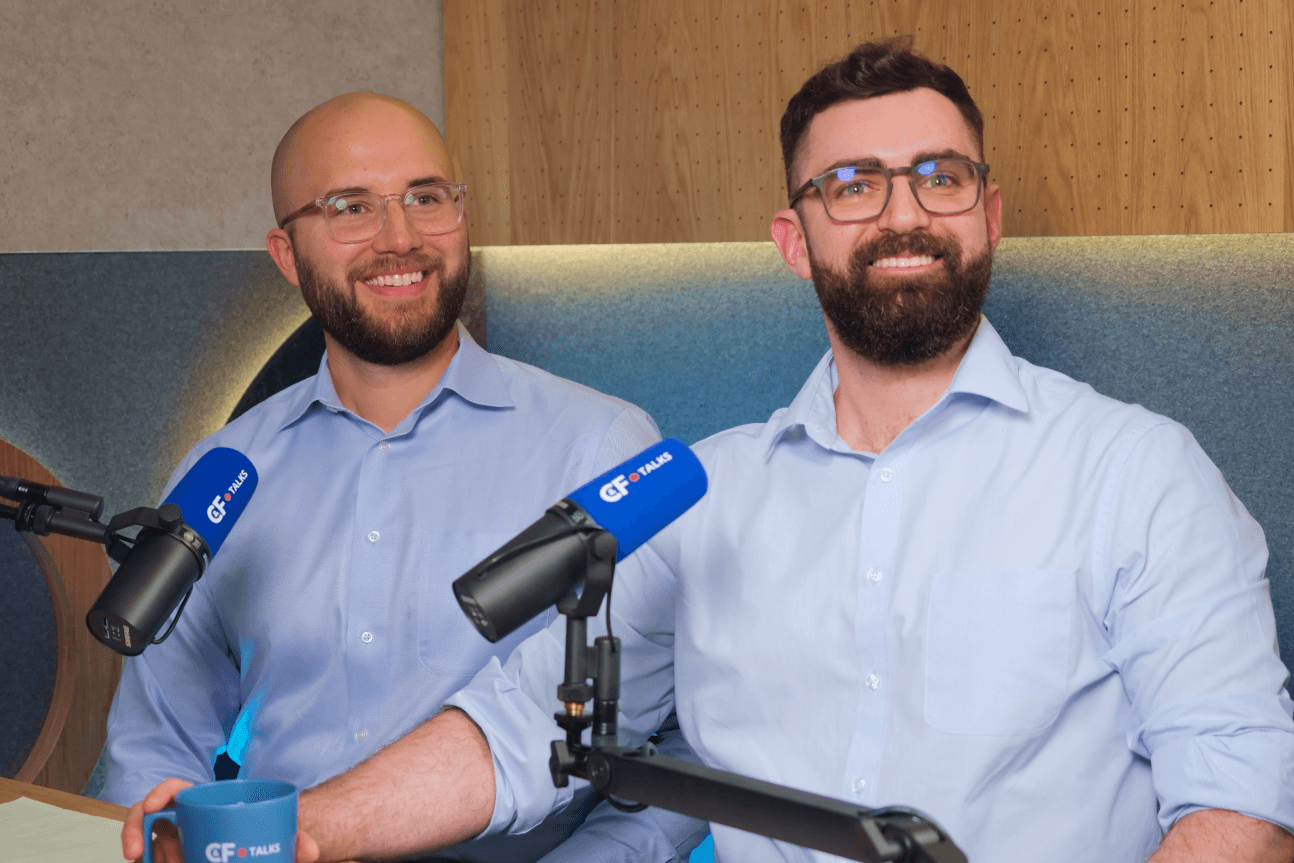
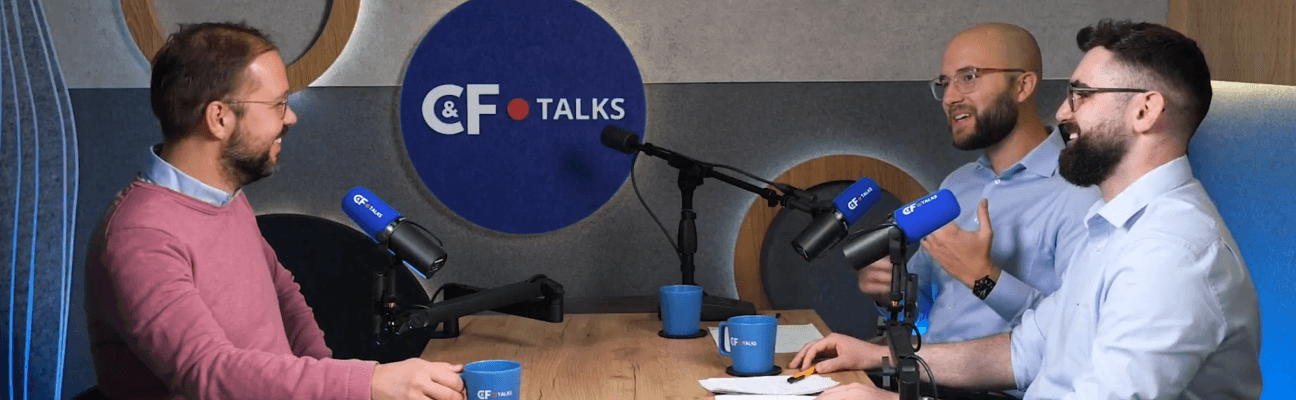
Hi everyone, my name is Maciej, I’m the leader of Analytics Experience Competency Group at C&F, and this is C&F Talks, a place where professionals discuss challenges and topics and trends from the perspective of an IT vendor. My guests today are Michael Mullan, Colton Kuepfer, and guys, help me with your positions here, tell us what you do, what’s your area of expertise at C&F
Colton Kuepfer [CK]
So yeah, name’s Colton Kuepfer, so at C&F, I work under the manufacturing business unit, part of the strategy and growth team, very much focused on our offering development. So keeping an ear to what do, as our clients’ needs evolved, keeping on the forefront of that, but then also working with our brilliant technology team, what’s daily as technology changes, what’s happening in the market, can we leverage that to benefit our clients. So really trying to connect the dots there is the key focus of my role.
[MK]
Excellent. Michael?
Michael Mullan [MM]
Hi Maciej, I also work in the manufacturing business unit alongside Colton, part of our strategy and growth, and I guess just another piece to add to that. One of the key thing sis how do we better align and partner with all of our clients to really help them on their journey. It’s not just about coming in, and in some cases, it does make sense to really look at what they need us to do, but where we excel with the s of Colton, consultants, myself with a background in manufacturing, and also our brilliant technical team, how do we bring all of our lived experience together into one package to ultimately help all of our clients where they are in their journey and help them get to where they want to get to
[MK]
Okay, guys, so today’s episode is a mix of a few topics. We are focusing on the manufacturing area, Industry 4.0. We will be talking about change management, digital transformation, maturity assessment. So tell us, what is the current state?
What do you see while working with our clients?
[MM]
It’s really interesting. If you look at the topic of digital transformation, it’s very hard to only pick one piece of that puzzle because if you think about it, and I really do see it as a jigsaw puzzle, it’s very, very hard to build that picture of digital transformation while only looking at one facet of how we would get any big project to completion. So when you talk about digital transformation, you said, Maciej, change management becomes a very big part of it, but also the other pieces, what is the context?
Are we talking with life sciences? Is it a really big mature company? Is it a small or midsize company?
All of these things come into consideration and ultimately it becomes one of these very intricate, complex challenges that you have to navigate. So if you look at a lot of the really excellent episodes that we’ve had to date, they all can very much connect to the big goal that is digital transformation. So again, we’ll not touch on everything that’s been discussed before, but as we started to talk through our episode today, it was very much a case of you can’t talk about one piece without at least talking a little bit about some of the other ones, because again, it is a very big, overarching challenge when we talk about digital 4. And the other piece to consider is what digital 4.0 means for each client is very different
[MK]
So I just wanted to ask you about that. Is it, do we have a standard approach that’s applicable to every client or we need to focus on certain industry case by case?
[MM]
It’s a great question. There is usually a north star. So for example, industry 4.0, pharma 4.0, there’s always the big goal. What’s that looks in terms of the journey will always be different because it’ll come down to who the client is and what their history. So take, for example, a big pharmaceutical company, take any of the really big ones. If you look back far enough in the history, a number of their sites in the network have probably came through acquisitions
So, you have a history of a different company, a different set of values, a different set of culture, a different set of driving factors there. So ultimately that will become something that you have to consider because when you start looking at pharma 4.0 or a big digital transformation project, you will have to ensure alignment across many different people, many different processes, and sometimes the technology will align really well. Other times you’re going to have to consider legacy systems, different types of technologies
[MK]
Operating models
[MM]
Yeah, exactly. Different operating models, but also different facets of the industry. So sometimes you will have sites that are operating slightly different technologies for the same type of product
So again, it makes our role as a C&F or as a consultant or a software vendor, I wouldn’t say difficult, but definitely challenging. A lot of really good opportunities to work and really partner with our clients
[CK]
Yeah, and that’s a key piece. And I’m wondering, Mike, if you agree with this piece from your deep industry experience of actually helping build these digitizing one of the top manufacturing or pharma manufacturing companies, being the tip of the spear versus my, we joke and call it big box consulting, that’s where I, cut my teeth starting off where being so obsessed with delivering value to our customer, my eye twitches when I hear digital transformation. And it’s, I don’t know who to credit this to, but I remember reading a LinkedIn post and someone just quickly said the two words, digital transformation has never made consulting companies more money than any other thing, just because it’s such a, the transformation is a brilliant word to add to anything to get some momentum to get people really excited. And, for me, I’d love to transform my weight.
[MK]
Digitally?
[CK]
I would take a solution for that. Any silver bullet would be amazing. And that’s where it’s when we get so caught up in, and that’s where I guess my recommendation, which I’m, we’re not going to change industry.
We know that. So we have to adopt the terminology of digital transformation, but it’s, it really needs to be viewed as a journey. And it’s not if there’s a CTO or CIO out there currently that’s getting pitched from these consulting companies, you give us $20 million and we will solve your problems.
We’ll give you this three year roadmap to completely transform your operations. No way.
[MK]
Impossible.
[CK]
Truly impossible. So do you, do you agree with that?
[MM]
I completely agree with that. And I think one of the, so again, as, as you alluded, I spent a lot of my early career in manufacturing and back at those points, we weren’t talking digital. We were talking, get a process on the paper and actually start living and breathing and understanding what are the needs of this process and is the process truly delivering value.
And that’s, again, I know we’ve talked about this at length, this idea of, do you need the process completely nailed down in order to start looking at the digital aspect or digital version? And the answer is very easily. It depends.
That’s ultimately, it depends in a lot of cases, having the process really mature will help massively. Like I mentioned earlier, when you have all these multiple sites, because again, now that we’re in a more technical, technologically advanced, I guess, way of working with, post COVID a lot more meetings happen virtual, a lot more data is being shared virtually across, every given facet of, business and manufacturing in particular. We have to think about the, the idea that processes need to be aligned because it’s one thing to have a very closed loop process where if I’m working in site a and I have this process and I know I have a digital solution, but the data doesn’t go any further than the site.
Okay, cool. You can, build it the way that makes the most sense based off of who your stakeholders are, who the process is for and the end users. But that’s not the reality of big pharmaceutical companies, big life science companies, because the data goes up and out of the sites.
It aggregates and has been used for more, leadership level performance, measuring, but also decision-making and we think about data and again, digital transformation is all about what does this process, what does these systems tell you in terms of data to make decisions? Like if I would distill down what digital transformation is, it is about ensuring that there is a development of data-driven decision-making. That is essentially what it is.
You are connecting all of these different processes, the people involved, all of the technology involved, and you’re enabling the data to be sent to the right person at the right time to make a decision that fingers crossed will be the right one.
[MK]
But in order to do that, you need to assess the maturity level of all manufacturing plants in the process, right? You need to align those processes, services, the data quality along the way.
[CK]
Just I guess to kickstart a transformation or journey, you would need to understand where what is current state to your point. You need to understand where our current challenges to, as Mike mentioned, what are the, the key use cases, the key personnel, excuse me, that we need to interact with and then we can build a strategy, a plan for, to get to a pilot and then ultimately all the lessons learned through the pilot, then we can scale that enterprise to, to ultimately get that benefit. It’s a key first step.
And one offering or service that we offer at C&F, it’s actually, it’s based off of BioPhorums digital plant maturity model. This is a goldmine of information. It’s on the internet, sign up for it and you can download it.
I highly recommend any business executive to search BioPhorums DPMM. It’s amazing because it truly lays out, you can, it lays out really what your North Star should be and where you should go. So now the challenges of that is understanding how to get there. And even more as an executive, you can read through their five maturity layers and it’s, I think I’m here.
It’s really hard to speak for a whole organization. You have to go to how you teed this question off site by site by site. So C&F, we’ve really helped clients understand and answer that question through our, what we call our DPMM, offering or assessment, where we take BioPhorum has, it’s, it’s great to help you score and do a quick assessment, but to really uncover all the rocks really understand what’s going on across your network.
It is a larger effort. And so we do, our clients, see a lot of value with taking that first step with us. We partner with them and, okay, let’s uncover every rock.
Let’s see where the organized, the it and ops are organized right now. Where’s all the effort? And how we should, what are going to be our next few steps on how we can get to the next maturity level than the next we think decision bringing it back, Mike, to your point of really increasing our, how can we digitize to increase our decision intelligence is a major milestone and benefit.
And then it, then it gets really exciting. It’s a little bit more future focused, but then it’s, you can, if we’ve increased our decision intelligence, now let’s start talking about automation. Let’s start talking about, future plans, it gets really exciting, really fast.
[MM]
And again, to come back to, the, I guess the very high level thread that we’re talking about here, digital transformation, we’ve got very quickly into very, specific pieces of that puzzle. But when you go back up to the initial statement of, we want to get to form a 4.0, sometimes it can be very challenging to think about how do we take that big, fancy, grand vision and actually go, okay, we’ve done a lot of talking. We know where we want to be.
We know what it’s going to mean for us. We’re going to have, this X million dollars of, of investment, but we’re going to get X million back in improvements. We’re going to be the market leaders.
Fantastic. Brilliant. Everybody sold How do we do it now?
[MK]
And why?
[MM]
And why?
Where, where do we focus? Where are we going to get the biggest buying for our buck to start with? Because again, thinking about these types of really big, several year in the making strategies or projects, you can’t wait until three years from now to show value.
No financial team, no executive team is going to say, yeah, show me value in three years. I’ll keep funneling money in here. No problem.
That, that just realistically doesn’t happen. And again, to come to your point, that’s where the assessment can really help because you can go in, start to understand where we’re pretty good, but also where we’re maybe not so good, but also uncover, okay, we can get from a one in this piece of the assessment to a two pretty quickly. And if you can do that, then you start to get people bought in because again, it can be very difficult to bring everybody in an organization along the journey at the same time.
Like from a change management perspective, we all handle change slightly differently and at different speeds. Some people, probably myself, I would fall in this category of the enthusiastic innovators where, yeah, that sounds cool. I’m in, let’s go.
Let’s, let’s see what this is about. And there’s others that maybe been around for quite a long time, seeing some of these projects or initiatives rise and very quickly fall. Everybody’s on a different, I guess journey when it comes to that thing.
So again, there has to be an understanding of, we need to build data points to say this is where we are, but tangibly, this is the incremental steps we can take to get there. I think one of the things that we haven’t touched on is C&F has three decades worth of experience when it comes to life sciences and data. So again, from an assessment perspective, it’s one thing to know where you are.
It’s another thing to have a trusted partner that can help you understand where there can be very, maybe not really small, but smaller in nature changes to the way you work that can massively improve certain processes.
[MK]
But the assessment process is the first step, but before that you need to have this awareness. So how do you start off with the project that?
You approach the client first or the client approaches us, or there is a discussion between, is there awareness about the need of transforming into industry 4.0, the awareness of the current maturity state of the company, or there is just a dream and need of the stakeholder that we want to be there. You want to be there or you need to be there. And I remember from the discussion with Heath, nobody needs to be on the fifth level of maturity.
You don’t need to be there. Sometimes you can be on the third or the second. It’s enough.
It’s not that you, put a hundred million dollars in a project and it, you instantly go and mature yourself to level five. How do we start this, this journey?
[MM]
Well, these days, the, the start of the journey is we want AI. We want agents, we want LLMs, we want to have everything being automated. This agent is going to pick up this process, pass it over here.
We’ll have a human in the loop. They’ll verify that things are as, as expected. And ultimately we’ll have all of these big transformations very quickly and everything will be great.
That’s generally how it goes. And any, any stakeholder in, in client organizations we speak to nine times out of 10, they’ll say, my boss is driving AI, I need to get X number of AI initiatives done.
[MK]
It doesn’t really matter if it brings value or not worth. We just need to be right here.
[MM]
Right now the importance is that we are on the trend. And that makes perfect sense, right? It always happens where there is current trend.
We need to make sure that we’re being seen to be innovative. Like companies thrive and do very well with social media, with marketing. When you can show that you are constantly innovating, look at any of the big companies, there’s always a air that they are on the cutting edge.
They are pushing boundaries. So AI is no different. I guess the challenge, especially from our perspective in C&F is AI doesn’t happen overnight.
AI needs data and data for the most part. And a lot of the companies that we talk to is hidden or siloed or disconnected or incomplete. And that becomes the challenge.
So when you think about the big, again, AI could be your big North star. It can’t be a North star three years away. So we have to think about how we build a strategy and a plan that allows for evolution, maybe not, I wouldn’t say quickly, but tangible evolution earlier than your big, large initiative to show a, we can achieve things and B, can we do it in a way that shows incremental value?
So it’s not about letting me get all my data connected and get all of the AI in there and start, showing value, but how do I find one very business impactful use case, get all of the data needed for that use case for the end users involved in that process and then create true innovation, whether it be AI agents, whether it be LLM, whatever the case may be. But how do I get the data from where it is now more often than not trapped in equipment somewhere or in a historian? How do I get that data out?
How do I ensure that the data meets the expectations of the people and the process? And then how do I show the business value impact of the initiative?
[CK]
I think that was beautifully summarized and a key intake point from Maciej’s question of, I would say I’d categorize that as our larger corporations are, I need AI. And then we work backwards. There’s really, I guess, a spectrum to answer your question around how, how do clients know to kickstart this journey?
And really well said, I think that’s the challenge we have with the larger corporations, the more established, the more, I don’t want to say political, but it’s, we’ve heard a fancy solution on the market, help us implement this because the board has told us we need to have X solutions and we have to work back to get to business value. When we work with smaller to medium sized companies, it’s I need more throughput. I need to increase quality yield.
How do we get there? And then they leverage. So great
We’ve already started with that a proper problem statement. Now we can bring our technical expertise. Like we’ve got the use case there, at least the KPIs we need to hit.
It’s, all right, if we do this, this and this, we can actually steer that. So it’s I feel we can have it’s I don’t think there’s it’s really meeting the client where they are. So when the clients are much bigger and there’s maybe there’s I guess there’s just probably more budget to, I’m interested in this area.
Let’s dive into AI. We have to do more education and more, all right, we have to start here, here and here. So, Mike, that’s an absolute great point on and specifically I would categorize that ask or how to answer his questions of, how do clients know how to start that and how they when do they come to us?
Large corporations are bigger clients, more established ones that have big budgets are very much from a we’re interested in this solution. Insert AI, help us implement it and we can figure out the business impact. And it’s, okay, we’ll work backwards and we need to eventually get the business have impact.
Well, when more of a medium sized company is much more, hey, I need this throughput to increase three percent next year. I need first pass yield to increase our percentage, our KPIs. They come instantly with questions.
So it’s really around meeting where our clients are. Like, so I would say that case that those KPIs come much more from if we’re engaged first with an operations stakeholder and then we can use digital tools to help them kickstart their digital journey. And then also we just have some clients or that come to us and say, we know we need to start digitizing, help us transform.
And it’s that’s a great starting point there. And then we help from the very beginning. What can this look and how it’s stressed on this is a journey. There’s no silver bullet.
[MK]
Nothing’s going to solve everything for you.
[CK]
And nothing’s going to solve all of your problems overnight. And I think we really thrive on being that partner that we can walk through every key phase with our client.
[MK]
OK, but this is the talk with your direct stakeholders. And when you introduce the change, how do you how do you get the buy in from the people who are actually using the solution or are impacted by the solution? Do you see, friction, resistance, they have their ways of working.
They’ve been, as you said, there are different plans acquired over the years, different operating models, people with a lot of years of experience and new guys who are, very eager for the change. So how do you work with that?
[MM]
It’s a great question, Maciej, and it really comes down to do we know who is going to be involved? And when involved, one part of that is our stakeholder or stakeholders who is really partnered with us on this change or this value or this expected impact that they’re looking for. And it depends.
Sometimes we will have an ask that is very specific and sometimes it’ll be we need to change and we can and we have been in many cases involved in some of those higher level strategy of, OK, these are the types of value drivers that certain solutions, certain technology, certain digital processes can achieve. And then, you said, it’s about understanding how do we how do we measure success? And that comes from knowing who our end users will be for that product or for this digital process.
So it’s really about understanding how we build that overarching stakeholder map. And that’s probably one of the biggest things that I would say from this talk today. You need to know who everybody is involved, whether it’s people that are going to be hands on day in, day out, partnering, understanding what needs to be done, what data needs to be accessed.
Does it need to be cleansed? Do we realize that we don’t have all the data? We’re going to have those day to day partners.
But within these big organizations, there is the silent partners, the folks that may not be involved until several weeks or months down the line that will have a major say in approvals and other different things. So the earlier we can help our clients understand everybody that is needed, because the other piece to remember here is we may be talking with a particular type of client. So, for example, and I guess the two classical ones in life science would be, is it an operations person or is it a IT person?
If it’s an operations person, they are going to have a much better understanding of the processes of, for example, from a manufacturing perspective, exactly what would be needed. But they may not know who in the organization is going to be able to help them from an IT point of view. Also, budgeting could be a factor here.
Who actually manages the budget for these types of big digital transformations? It tends to be something that needs to be managed or aligned across multiple stakeholders, multiple departments. And that’s why digital transformation is so difficult, because it’s not just one person going, let’s digitally transform and just everybody goes in the same direction.
It’s many people having to make decisions to say, yeah, I agree with this. This makes a lot of sense. I’m bought in.
And everybody’s saying, OK, we’re all bought in, whatever that means, whether it’s saying that I will dedicate my team’s time to this, whether it be that I will prioritize certain processes or certain process improvements, all of this needs to be considered. So the more you have that stakeholder map fully understood and also understood from the perspective of who is going to be the key decision makers at certain points in time, sometimes you’ll need the major stakeholders to approve decisions. Sometimes it’ll be people more close to the process on the shop floor or in engineering or in quality that can say, yeah, I’m the business SME here.
This is going in the right direction or no, we need to consider this. So to come back to your question, Maciej, the sooner we can identify the true end users and the true business SMEs for that process or that overarching project, the faster we can really understand what is needed, but also mitigate lots of what I would call the uncertainties, because ultimately if we stay at a certain level within your digital transformation projects. When you get to the OK, we have an MVP, here’s some designs and you show end users that haven’t been involved.
Honestly, we may not hit the mark because the requirements sit with that SME. But the other piece to, to touch on change management, and I know a number of our colleagues have talked through that in the past, change management is going to be one of the key things to make or break any digital transformation project or any project in general.
Do the key people that need to help make this change happen feel involved and feel heard and feel they’re part of the change? Because we’ve all been there where, certain things have maybe been fully out of our control and it can be very hard to say, yeah, that’s OK. But if we’re involved with the change, we understand what the change is, we have a part to play in molding or shaping what that new way of working is.
It makes it much easier for everybody to move together in that same direction. And the same thing’s true for our end users. If we get them in early enough, they’re helping to define requirements.
They’re helping to build out the visuals, for example, working with our UX team, our very fantastic UX team and C&F might I add. If we get these end users in early enough, A, we can uncover a lot of unmet needs that maybe our stakeholders hadn’t even thought of. But B, they are now really passionate.
We get a lot more buy in, a lot more involvement, probably better requirements. And they also then become the catalyst. So if they have let’s say there’s a team 10, 20, 50 people, if we have the buy in from certain end users that will help with the change as well.
And it makes it much easier from an unknowns perspective, because once we have business SMEs involved early, we can really help shape what the end result is. And coming back to that point, if we can get the end result right, then that should cascade much easier up to the overarching business impact. So, again, all of these smaller, tangible, quick wins will ultimately aggregate up to whether we will win or lose when it comes to that overarching digital transformation.
[MK]
The lack of change management is one of the risks that, such processes fail. What are the other challenges and risk you identify along the way? Poor stakeholder management?
[MM]
Poor stakeholder management, we said, is definitely, definitely one of them. The other key one is really understanding all of the data involved in a process. So, again, in my previous life, very heavily involved in manufacturing, very heavily involved in building and improving processes, some digital, some not digital.
And one of the key things that is very easy to overlook is this idea that a process is ready to be digitized. And we’ve seen it time and time again where there’s maybe an expectation or an understanding that the process is digital ready. And then when we go and start building out the digital solution or building out pieces of the digital solution, you realize very quickly that maybe there’s more evolution required for that process and that can cause major problems as well.
So even if we do have stakeholders involved, sometimes the process just needs to go through some more iterating. And you may not uncover that until you start trying to push the boundaries of what that process is, can be, the scale, whether it’s cross-functional, whether it’s cross-site. The process then starts to get tested when you put these types of, I guess, stresses on it from a digital perspective.
And there’s nothing wrong with that. I know we’ve joked about it in the past about this and we mentioned it earlier. This idea of does a process need to be 100 percent mature in order for it to be digitized?
I don’t think that’s the case.
[CK]
I don’t know the question to answer. And some people, there’s clear sides to the answer in that question. People are very passionate.
But I think my stance is classic, it depends. It depends what it is. But that’s where it’s, you need a partner to help you.
There’s very, very little situations, any leader listening to this knows, there’s rarely any situation where it’s either a yes or no. There’s always gray area.
It always depends on where the client is. So that’s why it’s so important to, work with the partner, lay it all on the table. And does this decision make sense?
Can we digitize this process with leveraging solutions low code, and these solutions that lower the barrier to entry for creating digital solutions? You don’t need a year-long development team to build out one applications, you can actually quickly iterate. So that’s, I think we’re trending towards answering that specific question.
Do we need an established paper-based process first? I think it’s slowly moving to no. Do you agree?
[MM]
That’s a fantastic point, Colton. And maybe just to jump back, say 10 years ago, if we had a process that is on paper, or in my case on whiteboards in a manufacturing environment, it can be difficult to do the necessary tweaking and evolving of a process once it’s already digitized. And I’ve seen that in the past where we have been able to do some really fantastic work with teams, because you can feel fast, iterate and move on very, very quickly.
Like to the point where if you have a paper-based system, and we don’t it, tear it down, throw it in the bin, put a new version up, try it for a week, tear it down, put it in the bin, put a new one up. And those incremental changes will ultimately improve and mature the process. Now, I said, five, 10 years back, if we’re building some custom solutions, it could take 12 weeks before you get the first concept or version.
So now you can still do the iteration, right? But now it takes longer to get to the next iteration. You now get frustration with end users that have been sold a vision of we’re going to be digital in X weeks, X months.
This is the value you’re going to get. And then the reality sinks in, okay, it’s going to take a little bit longer. You’re going to have a little less control in terms of exactly how the process meets.
Your process works perfect for you, but in the grander scheme of the company, we need to align across 20 teams that do the same process. Now you get into this scenario where it can be very challenging for end users to stay on that journey because they may only have touch points every few months. So when you’re not there, they have everything else going on there.
They’re real jobs, so to speak. So that can be really difficult. But to touch on Colton’s point, we’re now in a case where we’ve got all of this technology.
We can rapidly prototype with AI, with AI agents, LLMs. We can type into ChatGPT, hey, give me the high level basis of X product with requirements. And we can do that. How good they are, it really depends, but we can very quickly do that.
And what that means is how we can build our initial prototypes with end users at the core has changed. And what by has changed is we can do it way faster. So we can still iterate on a process in a digital context without it taking six months until you get the first MVP.
So you get the best of both worlds. You get to iterate quickly with your end users, get that buy-in, be on the change management journey with them. You can also get digital out there earlier, show the value of it, and you can also start to keep the price down a lot more.
And that also helps the stakeholders because ultimately the biggest challenge, and anybody out there listening to this, the biggest challenge is if I put X amount of dollars down for a digital project, there’s a very high likelihood for all manner of reasons that number at the end is going to be a little bit more, or you’re going to get a little bit less for what you expected with that budget. So again, we’ve talked about a lot of the barriers or a lot of the causes of that today.
And I think one of the take home messages that I would to make sure is out there is we’re now in a society or technology era where we can do more with less. There’s still understanding needs to be made that big, massive digital transformation journeys will need budget, can’t be done for free, can’t be done for a very small price either depending on the scale, but we can do very quick iterations. We can prove very quickly whether we’re going to get value and that can help drive adoption.
It can help bring people on a journey and it can also prove the point of this is the right thing to do or this journey will bring value. And that’s what this really comes down to is can we quickly show the value and allow that to aggregate and scale to these bigger overarching digital transformation journeys.
[MK]
And tell me, are there areas where digital transformation makes more sense compared to other areas where you try to impose some transformation and, the amount of money you need to put in will give you a little value?
[MM]
I think the first one that comes to mind for me is a greenfield site. So if there’s a company that is building a new facility. So, in the context of life sciences, let’s say there’s a new facility being built in wherever.
You have no legacy systems. You’ve got no legacy culture, politics, ways of working, which can be, we’ve mentioned, barriers to really getting impact from digital transformation. And you’re really starting with a blank slate.
Those are the perfect places to innovate, test and really show the value because you can get straight into some of the process, identification, definition and creation without having to manage all of the legacy history that you may not be aware of. So those cases can be a lot faster when it comes to can we create digital processes from scratch? The other benefit is for most companies, the shiny new toy gets a lot of the budget.
So that can also be a benefit. Now, the challenge and one of the things I know we’ve talked about a lot is there’s still a digital transformation journey that’s happening there. No big life science company wants to just have one North Star site in the network.
There is a need to scale. And that still poses the challenge because at some point the innovative, the new kid on the block site will have a lot of the technology that is required to make the digital solutions work well. You may not get that in some of the older sites, sites that are maybe 100 years old that have some paper based systems still working today.
So that also comes with this challenges and that can be difficult. I guess from a C&F perspective, this is why we enjoy these challenges. We enjoy partnering and really understanding the overarching vision that our clients have, but it does come with challenges.
It also comes with a conversation that needs to happen in terms of expectation. It’s easier to do. Like I said, it’s easier to do these digital transformations and sites that don’t have all of the, the legacy background.
But if there is an intention that the whole network rises together or at least at some point in time or on parallel footing in terms of the digital footprint, in terms of the digital innovation, it is something that needs to be considered. What has taken X amount of time, X amount of dollars in one site may take a lot longer. So it’s about being able to build that understanding and build that blueprint to some level of realism as well.
But yeah, it’s definitely a challenge.
[CK]
I think that is, how starting off with Greenfield is absolutely brilliant, because that frankly shouldn’t even be a question. If we’re at a Greenfield site, should we digitize our manufacturing process or not?
[MM]
Sure.
[CK]
The answer is yes. And then it’s the question is in terms of where should we invest to get the most return on our investment within that site? Makes sense. When we go to, as you were talking about, an existing site or existing structure, a lot of historical pieces, I would, and that’s part of the assessment piece and figuring out what makes sense, because, we wouldn’t recommend digitizing a site that doesn’t have sold out capacity when the site next door has 100% sold out capacity, they can’t make enough product.
So, we would obviously recommend prioritizing effort to that piece. But putting all the ROI discussion on the to the side, I would say the sites with the most mature production systems that are established makes, I would say life a lot easier. So if you if you already have great lean principles, you’ve got great shift handovers, and yes, it’s all paper brace that they already know the requirements.
It does make the digital journey easier when something’s already established. So I would say if, if you’ve got one site that’s a little bit more mature from a more of a, I guess, yeah, lean in productions, that’s where I would first start the digital journey, and really focus in on that site first, and then get as Mike was saying, you really have to, there’s no silver bullet, you have to get your quick wins, establish those champions and then just build, build slowly from there. Because I know from past experience that as hard as it, no big box consulting firms will, they’re going to sell you that big vision that, hey, you sign that check for $20 million, we’ll, we’ll deliver all of these results, it might take a few years. But that is, I’d be very wary of that.
Just because it is a brilliant marketing and sales approach. Basically sign on the dotted line, and I’ll solve all your problems. And we know from experience that doesn’t, it never meets expectations, from your point from a return on investment, which is the most important, and then it never is the what is the budgeted item, it’s always more when you try to, we joke about all the time, boil the ocean.
So that’s how you just have to very it’s why that first piece that figuring out what are the first two or three steps is so critical. And that’s where it’s, invest the time and figuring out what are those steps. So you can build, you can push that small snowball down the mountain, and it can grow, grow versus trying to roll that $20 million engagement or project digital transformation up the mountain.
And it’s just, it’s almost it’s failed before it started.
[MM]
The other piece that that’s very, very interesting is a lot of these digital projects or high level vision talks about the angle. So we want to be predictive, we want to be proactive, we want to be automated. Most of these projects, the first several months, is let’s get connected first, let’s get the data out and somewhere that we can actually use it.
And then all the predictive capabilities become actually feasible. The other piece is when you look at some of these high level value drivers, when you get down to the actual shop floor, there’s probably all manner of quick wins that don’t really push the needle when it comes to this overarching transformation, but it will push the needle in terms of people seeing actual value from having consultants involved or from having global teams or limited duration teams involved in these types of initiatives. And the other piece to remember is there’s lots of really excellent innovation happening in sites outside of digital. And that’s the other really cool benefit of getting to your end users as soon as possible, because you can understand what’s happening in there.
What are they living day to day? And then you can start to build out that sense of, okay, if this is already going on, there’s continuous improvement. To your point, Colton, they’ve got really good shift handovers.
Then you can start to understand how these things can start to tie together because within the manufacturing perspective, it’s all about what are those big value drivers that you’re looking for. So if you think about any manufacturing leader out there, they want to improve OE. They want to improve throughput, reduce reject rate, improve yields.
All of those things are the higher level KPI that may not be the type of KPI that some of your smaller quick wins will help with, but in the long-term grand scale things that will. So putting in an action log, for example, will not reduce cycle time overnight, but getting the conversation started in terms of communicating where we need support, where we would escalate certain actions out of the shop floor to more senior leaders that may have more bandwidth. We can get engineering involved.
We can get whatever new piece of equipment is needed. The ability to really understand how the problems can be either dealt with by the end users themselves, owning their own reality, but also when things need to be escalated, how that happens. And digital is really, really good for that.
It may not hit some of the high level KPIs to start with, but I can assure you if you can get some of those types of initial processes working and working really well on covering the real issues, showing the potential upside or downside of not fixing a problem, that can help get whatever buy-in is needed. So again, from an assessment perspective, being able to get to those layers of the organization that really understand what is keeping things moving or slowing things down really helps build out this sense of we’re all in this together. We are trying to help improve things and you can actually see what is improving for me as whichever end user or me as whichever manager or stakeholder.
So that’s definitely one of the really important pieces is really understanding that things won’t happen overnight, but they won’t happen at all if you’re not talking to the right people.
[CK]
I think that right people are, as you mentioned, all working together. Who are those groups? That is IT and business.
It’s redefining through a successful transformation. We’ve talked a lot about the challenges of it and stuff, but forming that partnership is such a big piece of the work that we do. It’s the groundwork that enables a successful digital journey.
It’s not just setting up a weekly call and a chat. It’s how can we integrate the strengths and weaknesses of each of these parties into new ways of working. When that’s done right, those are our most successful digital journeys.
You can’t approach it as, “let’s start a digital journey and I’m going to keep doing my day job and operations will keep doing my day job”. It doesn’t work that. After a successful digital journey or transformation, at the end of that, those roles look differently.
They collaborate in completely new ways. Most importantly, what we’ve found is they speak the same language. They know each other’s pain points.
They know where each other brings value to the company. From an operations side, it’s easy to say, IT just keeps my laptop running. That’s where it stops.
We know from an IT perspective, the amount of enabling they do to get, especially in pharmaceuticals, the amount that they do to enable GM really good product that meets compliance, operations wouldn’t be able to do anything without them. Then also vice versa, IT, it’s operations, they just pump out product. No, no, no.
They are from a lean perspective, the value drivers of a company. They’re the ones that take raw materials and make it something so we can sell. We spend a lot of time teaching, I think educating both sides in terms of where they both sit on this overall value chain of the company and, hey, guys, we need each other.
Let’s figure out how best we can partner. Those are some of the key early conversations we have. Then it really trickles down to more of engaging site IT with the shop floor.
I’m smiling now because you can start seeing that momentum. It takes a while to start, but once you start seeing the relationships form, it becomes really exciting. That drives a lot of the value.
That’s a key foundational step.
[MM]
You really hit the nail on the head there. We’ve heard this from a number of senior stakeholders and multiple clients. The ability to get people on the same page and to your point, speak in the same language is absolutely critical.
If that doesn’t happen, things can still be done, right? But you have to put so much more energy into pushing that direction.
There is a lot of friction. It’s more money. Or you’re not getting the ROI.
[MK]
So essentially you are being the coach to build a team, a mature team. Everybody knows their place and the role and value they bring within the organization.
[MM]
We bring lessons learned from previous engagements, previous clients, but we also want to ensure that we’re enabling the right business context to be brought to the table as well. Because again, none of these things can happen without having the client’s business understanding at the heart of the project. You need to have the right stakeholders, the right end users, champions as well.
You need people that are really bought in to understand the why and can help push in that direction. So from an assessment perspective, once you have that, I guess, blueprint or understanding of where we are, everybody can now talk about that in the same way. So IT now understand, okay, this historian is not connected to the equipment or these processes are right now incompatible with getting to the cloud, whatever the case may be.
You’re now speaking the same language. Some parties will probably have more understanding, but everybody will have enough base level understanding to know where certain pieces of the puzzle need to fit in, what are foundational elements, and then ultimately what is priority. Because I guess the other possibility with an assessment is you just get a list of 150 actions.
It could be, hey, you’re at a one out of five. You need to do this 150 things, and then everything will be good. And look, that isn’t helpful either.
Then where do you start? And that’s ultimately where we as C&F come in. Again, when it comes from a DPMM assessment, we don’t just show you where there’s gaps or where there’s opportunity, but what is the priority?
So where are you going to maximize early quick wins versus we know certain things will not bring value right now on their own, but they are absolutely essential foundational elements to get you later in the process. So take, for example, event-driven architecture, unified namespace, something that probably everybody listening to this has heard of. One conversation or another, those things, depending on how you set them up, may not drive value initially.
But if you want to get to the automated site or network of the future, you need to have your data connected. You need to have your data contextualized. Your data needs to be consistent and uniform across multiple systems, multiple platforms, and multiple sites for the ability for any AI agent, LLM model, machine learning algorithm to actually make sense of the data and then help drive those decision-making processes.
So that’s the other piece and something that we’ve been working on very heavily in C&F is building out our concept of UNS architecture, but also what it means for our clients, what it will accelerate, what it is absolutely foundational for, and also where to start. Because again, we’ve talked about for this episode, it can be really hard to know where to start. You may know where you want to get to, but it might be hard to know what step is the right first step or what steps are the right 10 steps. And that’s where we can help ultimately.
[CK]
And especially facilitate the answer of that, because I think some, whether it be consulting vendors will come in with, here’s the answer to that question. You should start here.
You have to start here. So we take a much, I would say more hands-on and facilitative approach to that, where we will bring in, we need to answer this question, but we need this person in the room, this person in this, and let’s come to this decision together versus just that force. Start here.
This is your next step. That’ll only go so far.
So we see our clients have seen a whole lot of value from us acting as that trusted partner. And, we’re not going to per se dictate step by step by step, but we are, we’ll make sure the right people are in the right rooms. And yeah, that’s where we see the most results.
[MK]
We’ve been discussing this, how things have been done in the past, how this digital transformation has been designed by big consulting companies. And you mentioned the trend that you see with our clients that they don’t tend, they tend to lean towards more boutique partners to, handle more precise tasks, challenges rather than building this very big multimillion vision.
[CK]
And I think that, that big multimillion vision came from, honestly, I think COVID and the remote work really triggered that hype and that excitement that it was a remarkable opportunity for larger firms that could sell this massive digital transformation vision and journey. And that stuck for a while as a status quo of, you need to be digital, get ready to invest 10 to 20 million a year to digitize your manufacturing process.
What we’re seeing now is they’re starting to get the results of that. And it’s to what Mike was saying, it was either way more money to get the results they expected, or they weren’t really getting the results they expected in terms of return on investment in worse scenarios, both. And that’s where we’ve seen them take a step back and take a more broken down approach or a much smaller approach.
And that’s where we see a lot of our business companies, they’re reaching out to more boutique firms, very specialist, very deep experience in, as Mike mentioned, to use his analogy, the jigsaw pieces of digital transformation, rather than trusting one firm to not only be the per se general contractor, and then they promise that they can do each step. Now we’re seeing companies select a general partner, but then make, and then that partner brings in the right expertise that can go very, very deep in each of those jigsaw puzzles.
[MK]
Okay, gentlemen, it was a very interesting discussion. Thank you very much. Thanks, everyone.
From vision to reality: building transformation step by step
Digital transformation only works when people, processes, and technology move together. The conversation explores how maturity assessments, such as the BioPhorum Digital Plant Maturity Model, help organizations understand where they are today and where progress will deliver the most value. Rather than chasing maximum maturity everywhere, the focus shifts to enabling better, faster decision-making where it matters most.
Data, change, and the human factor
AI, agents, and LLMs dominate today’s transformation conversations, but they rely on something far less glamorous: clean, connected, contextualized data. Mike and Colton explain why architectures like Unified Namespace are foundational, and why change management often determines success or failure. Engaging shop-floor experts early, aligning IT and Operations, and securing real buy-in turns technology initiatives into sustainable change.
Is your manufacturing network ready to scale digital transformation? Assess your maturity and find out.
Meet the experts
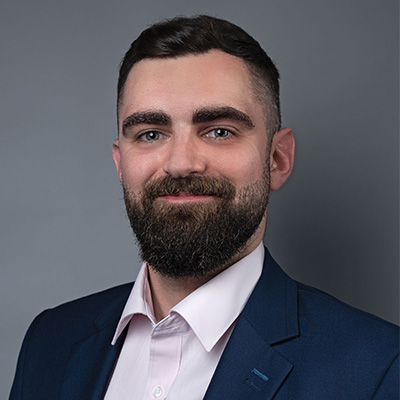
Michael Mullan
Director, Manufacturing SolutionsMike brings a rare and highly practical perspective to digital transformation. Before joining C&F, he worked inside a global pharmaceutical organization, where he designed and built digital production systems in complex, highly regulated environments. Having been on the client side of large transformation initiatives, Mike understands first-hand the operational realities, organizational constraints, and decision pressures manufacturing leaders face. This experience allows him to quickly grasp stakeholder context, ask the right questions, and translate digital ambition into solutions that work in day-to-day operations, not just in theory.

Colton Kuepfer
Director, Manufacturing SolutionsColton brings a strong consulting background. Prior to C&F, he worked at a Big Four consultancy, supporting manufacturing and supply chain transformation initiatives across multiple organizations. Through this work, he collaborated with diverse stakeholder groups, navigated complex governance structures, and saw a wide spectrum of transformation efforts, from highly effective programs to those that struggled under real-world constraints. This exposure gives Colton a sharp eye for where friction typically emerges, what approaches scale, and how to align business, IT, and operations to deliver measurable outcomes.
Let’s connect
Our engineers, consultants, and experts are here to help you uncover solutions tailored to your business needs. Whether you’re looking for targeted support or planning a complex digital transformation, we’re ready to help you achieve more.